
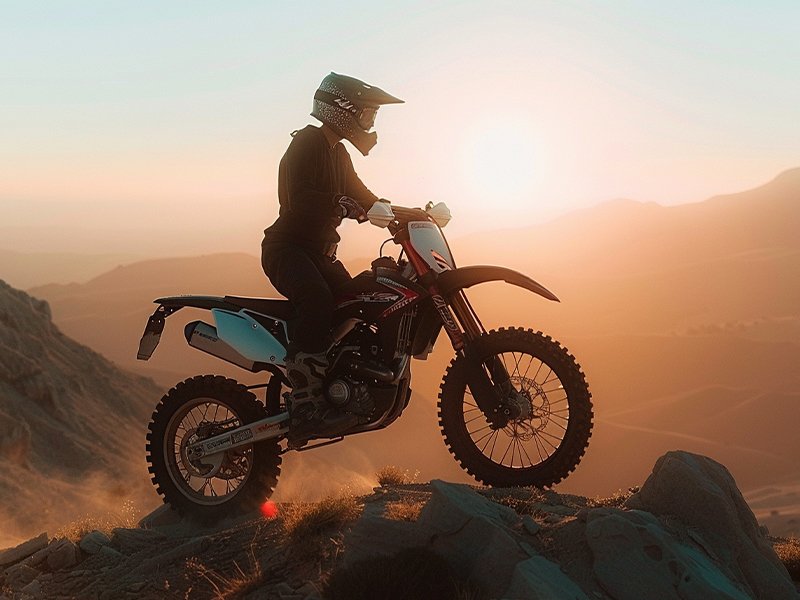

ELECTRIC DIRT BIKE
VALTINSU EM-5
EXPLORE MORE
ELECTRIC DIRT BIKE
VALTINSU EM-5 PRO
EXPLORE MORE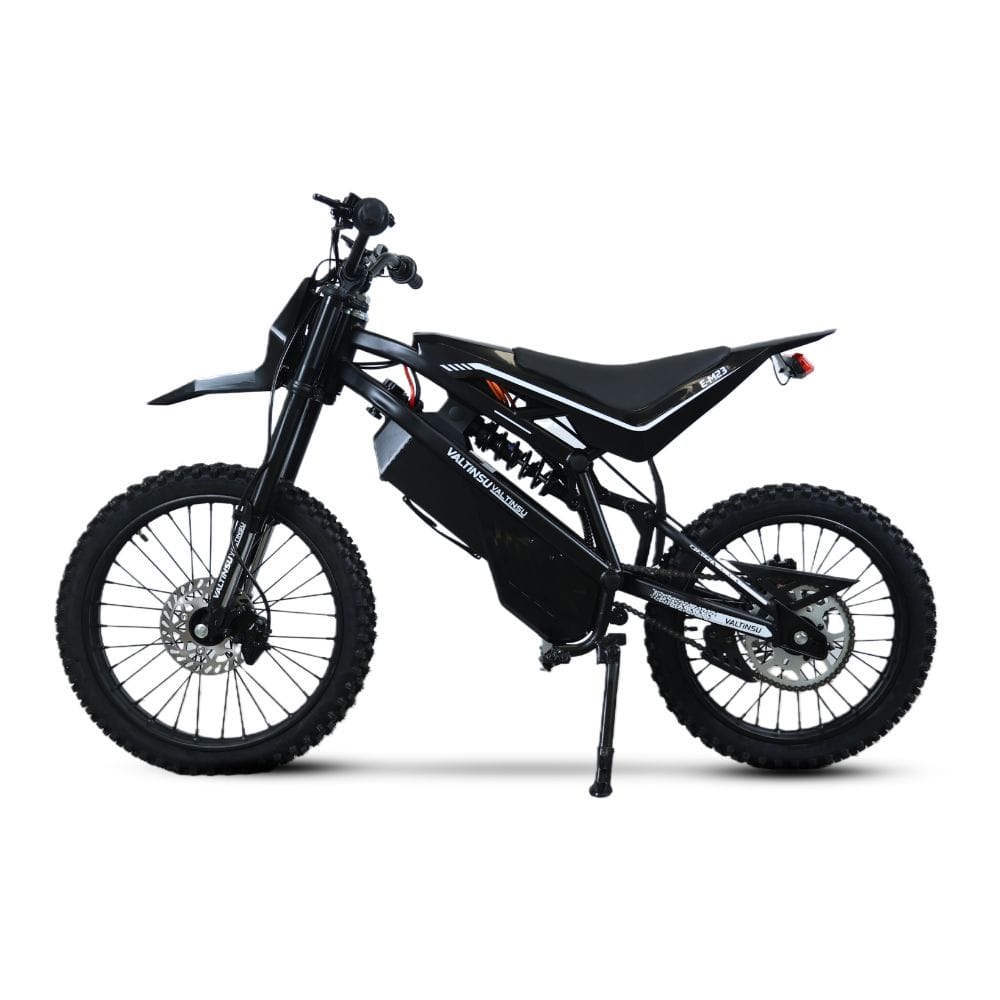
ELECTRIC DIRT BIKE
A 750W electric bike can typically reach around 20 to 28 mph, depending on the bike’s design, controller settings, battery, rider weight, terrain, and local speed regulations. On a flat road with a full battery and favorable conditions, some 750W e-bikes can reach the upper end of that range.
But watts and speed are not the same thing. A 750W motor tells you how much power the motor is designed to produce, while MPH tells you how quickly the bike is actually moving.
So, what can you realistically expect from a 750W e-bike? Let’s take a closer look.
Under normal riding conditions, a 750 watt electric bike can usually reach 20–28 mph (32–45 km/h).
The exact top speed depends on how the manufacturer configures the motor and controller.
For example:
Riding Condition | Typical Speed |
Flat road, moderate riding | 20–25 mph |
Flat road, full power | 25–28 mph |
Uphill riding | 12–20 mph |
Gravel or loose terrain | 10–20 mph |
Class 2 configuration | Up to 20 mph |
Class 3 pedal-assist configuration | Up to 28 mph |
These numbers are general ranges rather than guaranteed speeds. A heavier rider, strong headwind, low battery, or steep hill can reduce the actual speed considerably.
In the U.S., Class 1 and Class 2 e-bikes are generally limited to 20 mph of motor assistance, while Class 3 pedal-assist e-bikes can reach 28 mph under the relevant classification rules. Local laws can vary, so riders should always check the rules where they plan to ride.
The “750W” number refers to the motor’s power rating.
It does not mean that the bike will automatically travel at a particular speed.
Think of it this way:
Watts = motor power
MPH = riding speed
Torque = pulling and acceleration ability
Battery voltage = how the electrical system delivers power
Controller = how much power reaches the motor
This is why two electric bikes with the same 750W motor can perform differently.
A well-designed 750W system may provide strong acceleration and good hill-climbing performance, while another bike with the same nominal motor rating may feel slower because of its controller, gearing, battery, tires, or overall weight.
This is where many first-time buyers get confused.
A 750W motor is capable of producing a certain amount of power, but the manufacturer can electronically limit the bike’s speed.
For example, a 750W e-bike may be configured to stop motor assistance at 20 mph. Another model may be designed around a 28 mph Class 3 setup.
The motor rating alone does not determine the final speed.
Other components matter too, including:
The controller regulates how much electrical power is sent to the motor.
A manufacturer may intentionally limit motor output or top speed for safety, range, reliability, or regulatory reasons.
A 750W motor paired with a suitable 48V battery system can deliver a different riding experience from a lower-voltage setup.
Battery capacity also matters. As the battery gets low, the system may not maintain the same performance, especially under heavy load.
The heavier the total load, the more energy the motor needs to accelerate and maintain speed.
This becomes especially noticeable when riding uphill or carrying additional cargo. Real-world tests and manufacturer guides consistently identify rider and cargo weight as important factors affecting 750W e-bike performance.
A 750W e-bike can perform very differently on pavement, gravel, grass, sand, or a steep trail.
On flat pavement, the motor can focus more of its available power on maintaining speed. On a hill, a larger portion of that power is used to overcome gravity.
This means a bike that reaches 27–28 mph on flat ground may slow down significantly on a steep climb.
Tire design also makes a difference.
Fat tires and aggressive tread provide better traction for loose surfaces and off-road riding, but they generally create more rolling resistance than narrower road-oriented tires.
For an electric dirt bike or off-road e-bike, this trade-off is often worthwhile because traction and control matter more than maximum pavement speed.
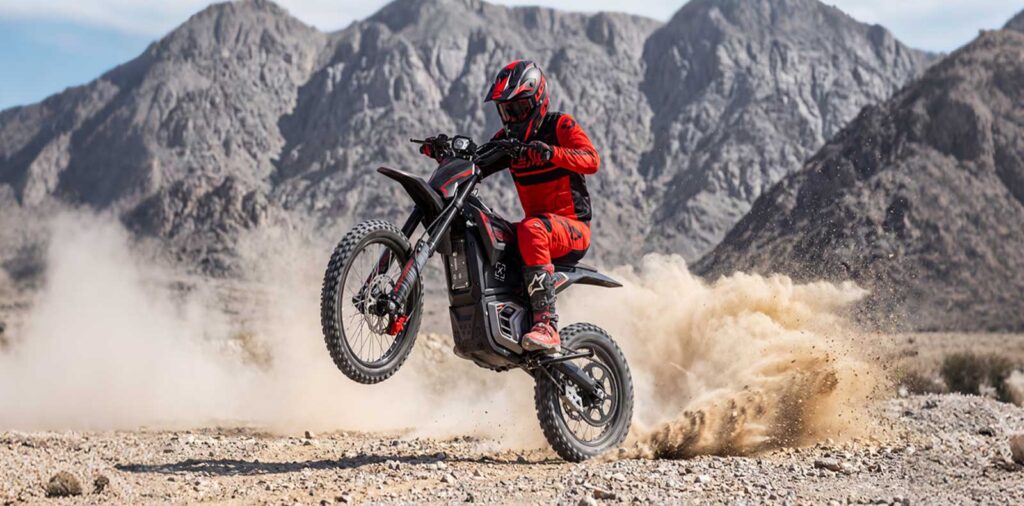
For many recreational off-road applications, 750W provides a useful balance between power, acceleration, and controllability.
However, an electric dirt bike should not be judged by top speed alone.
Off-road riding is different from riding on pavement. Riders often care more about:
Low-speed torque
Hill-climbing ability
Throttle response
Suspension
Tire traction
Battery range
Ground clearance
Overall vehicle weight
For example, a bike that can maintain a controlled 15–20 mph on a rough trail may be more useful than one designed only to achieve a higher speed on flat pavement.
This is also where the difference between an electric bike and an electric dirt bike becomes important. An electric dirt bike is typically designed around off-road handling and durability rather than simply maximizing road speed.
It is reasonable to expect a higher-powered motor to have more performance potential, but the relationship between watts and top speed is not linear.
Motor Rating | General Performance |
500W | Good for commuting and moderate recreational riding |
750W | Strong acceleration and good all-around performance |
1000W | More power for heavier loads, hills, and off-road riding |
1500W+ | High-power applications, often outside traditional e-bike classifications |
A 1000W motor does not necessarily make a bike dramatically faster than a 750W motor.
Aerodynamic drag increases rapidly as speed increases, and factors such as gearing, controller limits, battery output, tire resistance, and vehicle weight can become more important as speed rises.
So if your goal is simply to reach a higher top speed, looking at motor wattage alone is not enough.
This is where a 750W system can show its value.
On a flat road, reaching 25–28 mph may be relatively straightforward for a properly configured bike. On a hill, however, speed can fall quickly because the motor has to work against gravity.
A moderate hill may bring the speed down into the 15–20 mph range, while a steep climb or loose trail can reduce it even further.
The exact result depends on the rider, total vehicle weight, gradient, battery condition, motor torque, and tire setup.
For buyers comparing electric dirt bikes, hill-climbing performance and torque can sometimes be more important than the advertised top speed.
Technically, some 750W systems can be configured to travel faster than 28 mph, particularly in off-road or private-property applications.
However, this does not mean that a modified or unrestricted bike is legal to use on public roads.
E-bike classifications and speed limits differ by jurisdiction. In many U.S. classification systems, 20 mph and 28 mph are important thresholds, and a vehicle that exceeds the applicable e-bike limits may be regulated differently.
For manufacturers, distributors, and importers, this distinction is particularly important. A bike intended for road use needs to be designed around the regulations of its target market rather than simply advertised with the highest possible top speed.
If you are comparing 750W electric bikes, these are the specifications worth checking:
Motor:
Look beyond the wattage and check whether the stated power is nominal or peak power.
Battery:
Voltage, capacity, and discharge capability can affect how consistently the motor performs.
Controller:
The controller determines how the available electrical power is delivered.
Vehicle Weight:
A lighter bike generally accelerates more easily.
Rider Weight:
A heavier total load requires more power, particularly on hills.
Tires:
Knobby or fat tires are useful off-road but can reduce efficiency on pavement.
Gearing and Drivetrain:
The drivetrain affects acceleration and how effectively motor power is transferred to the wheels.
Speed Limiter:
The controller may limit the maximum assisted speed regardless of the motor’s potential.
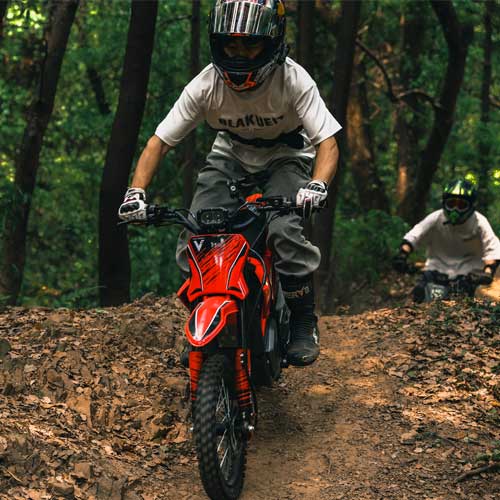
For many riders, 750W is already plenty of motor power.
It offers noticeably stronger acceleration than many lower-powered entry-level systems while still being manageable when the bike is properly configured.
For beginners, however, more power is not always better.
A good setup should match the rider’s experience, riding environment, and intended use. Someone riding mainly on bike paths may have different requirements from someone riding trails, private land, or an off-road course.
If you are buying for a distributor or retail business, the same principle applies. Different markets may require different motor configurations rather than one high-powered model for every customer.
As a simple rule of thumb, 20–28 mph is a reasonable expectation for many 750W e-bikes, assuming suitable conditions and a configuration designed for that speed.
But don’t choose a bike based on the 750W number alone.
If you are comparing models, look at the complete system:
Motor + battery + controller + gearing + tires + weight + speed settings
Together, these determine how the bike actually feels on the road or trail.
For off-road applications, a well-balanced 750W electric dirt bike can offer strong acceleration, useful hill-climbing ability, and enough speed for recreational trail riding without making maximum speed the only priority.
So, how fast is 750 watts in mph?
In general, a 750W electric bike can reach around 20–28 mph, with the exact speed depending on the motor system, controller, battery, rider weight, terrain, tires, and local regulations.
If you’re looking at 750W electric dirt bikes for recreational use, focus on the complete performance package rather than the wattage printed on the specification sheet.
For manufacturers such as VALTINSU, this is also why motor selection should be matched to the intended market and application. A distributor targeting recreational off-road riders may need a different configuration from a buyer looking for a road-oriented commuter model.
The right motor is not necessarily the one with the biggest number. It is the one that delivers the right combination of speed, torque, range, reliability, and controllability for the market you’re trying to serve.