
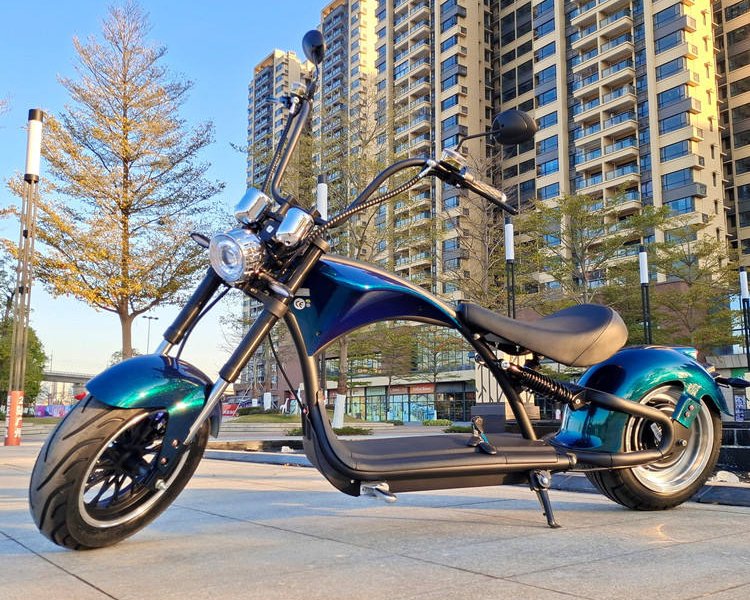

ELECTRIC DIRT BIKE
VALTINSU EM-5
EXPLORE MORE
ELECTRIC DIRT BIKE
VALTINSU EM-5 PRO
EXPLORE MORE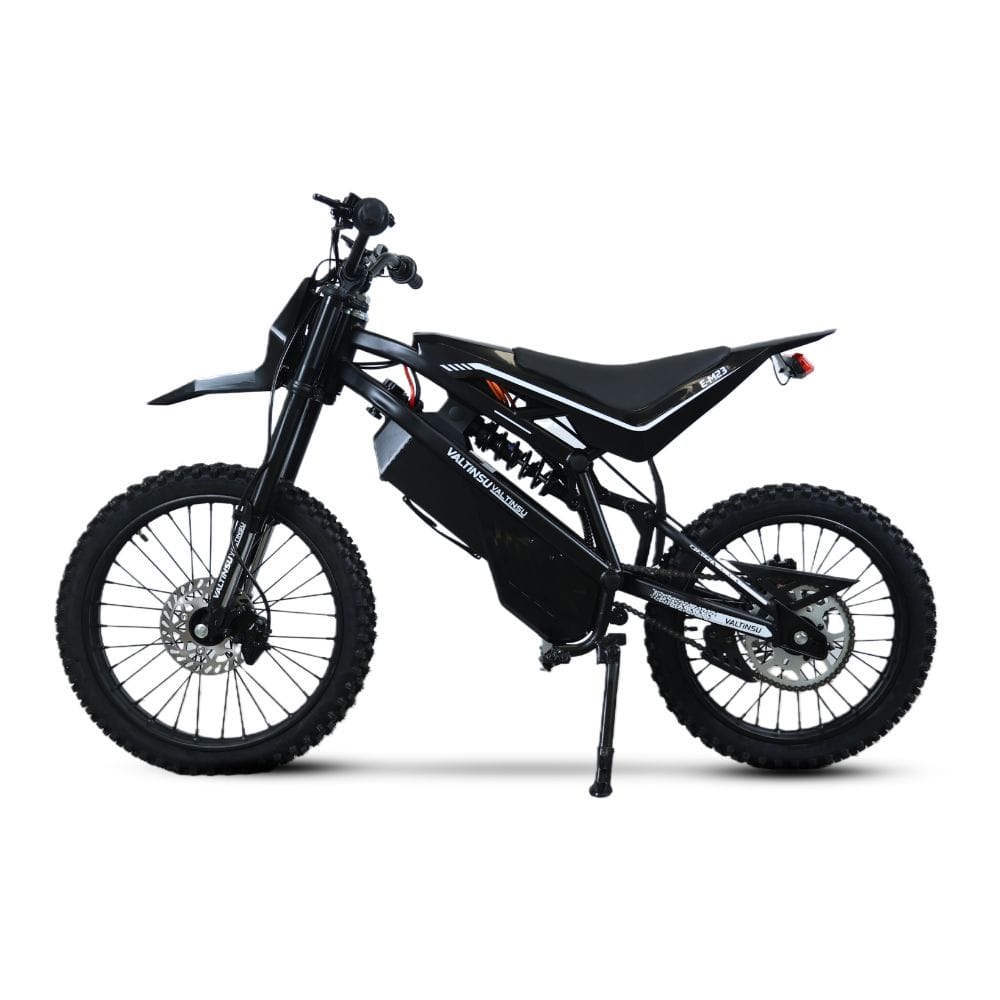
ELECTRIC DIRT BIKE
As electric off-road motorcycles become more powerful, buyers can now find models with 3,000W, 5,000W and even higher peak power within a relatively affordable price range.
So, what is the fastest electric dirt bike under $3000?
The answer depends on how you define “fastest.”
Some models focus on maximum top speed, while others offer a better balance of acceleration, battery capacity, suspension and overall build quality.
In the current market, several electric dirt bikes priced below $3,000 can reach approximately 45–52 mph, depending on the model and configuration. Some listings claim even higher speeds, but buyers should always check whether the figure represents actual tested performance, peak motor power or a manufacturer’s claimed maximum.
For buyers focused purely on speed, the fastest options under $3,000 are generally found in the 5,000W–7,000W peak-power class.
Recent 2026 market comparisons list models such as the Rawrr Mantis X at around $2,999 with a claimed 50 mph top speed, while the VALTINSU EM-5 Pro has been listed around $1,699 with 5,600W peak power and a claimed 52 mph top speed.
That makes the sub-$3,000 category surprisingly competitive.
However, top speed should not be the only thing you compare.
A $2,000 electric dirt bike that claims 50 mph but has a small battery and basic suspension may not be a better choice than a slightly slower model with a stronger chassis and better after-sales support.
A realistic range for performance-oriented models is approximately 35–52 mph.
Here’s a general comparison:
Power Level | Typical Top Speed |
1000W–2000W | 20–35 mph |
3000W | 35–45 mph |
5000W | 45–52 mph |
6000W+ peak | Around 45–55 mph |
These are general market ranges rather than guaranteed specifications.
Top speed can change depending on battery voltage, controller settings, gearing, rider weight, wheel size and terrain.
For example, a 5,000W electric dirt bike currently listed at $1,999 claims a top speed above 80 km/h (50 mph) with a 72V 30Ah battery.
Yes.
A 50 mph electric dirt bike under $3,000 is no longer unusual in the performance segment.
The more important question is whether the bike can reach that speed consistently and whether the rest of the vehicle is designed to handle it.
At 50 mph, the following components become increasingly important:
Frame strength
Front and rear suspension
Hydraulic brakes
Tire construction
Battery management
Controller
Motor cooling
Steering stability
A large motor alone does not make a good high-speed dirt bike.
One of the most common comparisons in this price range is between 3,000W and 5,000W models.
A 3,000W electric dirt bike generally offers a good balance between acceleration, range and price.
A 5,000W model can provide stronger acceleration and a higher potential top speed.
Feature | 3000W | 5000W |
Acceleration | Strong | Stronger |
Typical top speed | 35–45 mph | 45–52 mph |
Battery demand | Moderate | Higher |
Range potential | Generally better | Generally lower at high speed |
Best for | Trail & recreational riding | Performance riding |
Price | Usually lower | Usually higher |
This does not mean every 5,000W model is better.
For trail riding, additional power may not always be useful. A well-tuned 3,000W bike can be easier to control and may provide better range.
If speed is one of your priorities, a 72V electric dirt bike is worth considering.
Higher-voltage systems can support high-power electric drivetrains and are commonly found on performance-oriented models.
For example, some current sub-$3,000 performance bikes use 72V battery systems, including models in the 5,000W–6,500W peak-power range.
But voltage should not be viewed by itself.
A 72V battery paired with a small-capacity battery or poorly matched controller will not necessarily outperform a well-designed 60V system.
When comparing models, look at:
Voltage + Amp Hours + Motor + Controller
rather than focusing on voltage alone.
A fast electric dirt bike needs enough battery capacity to support its motor.
For example:
72V × 30Ah = 2,160Wh
That gives the battery approximately 2.16 kWh of stored energy.
A larger battery can provide more energy, but range depends heavily on how the bike is ridden.
A rider traveling at 20–25 mph may achieve much more range than someone constantly riding at 45–50 mph.
High-speed riding also increases aerodynamic drag and power consumption.
This is why a bike’s claimed range should always be considered together with its testing conditions.
For most riders, the answer is a combination of both.
A 50 mph top speed sounds impressive, but most trail riding does not happen continuously at 50 mph.
Instead, riders accelerate, slow down, climb hills, navigate corners and ride across different surfaces.
That makes usable battery capacity and motor torque important.
For recreational riders, a slightly slower bike with better range may actually provide a better experience.
For buyers who prioritize open-trail speed, however, a higher-power system may be worth the additional battery consumption.
Price is only the starting point.
Before buying a budget electric dirt bike, check these specifications.
Check whether the advertised wattage is nominal or peak power.
This is particularly important because some manufacturers use a high peak number in marketing while the continuous motor rating is much lower.
Check:
Voltage
Amp hours
Battery chemistry
Removable or fixed design
Battery management system
The controller needs to be properly matched with the motor and battery.
Full suspension is important for serious off-road riding.
Look at suspension travel, adjustability and overall construction rather than simply checking whether the bike has “front and rear suspension.”
At 40–50 mph, braking performance matters.
Hydraulic disc brakes are common on higher-performance electric dirt bikes and can provide better control than basic mechanical systems.
Check whether the tires are designed for the terrain you plan to ride.
Knobby off-road tires can provide better grip on dirt and loose surfaces, while other tread patterns may work better on harder surfaces.
This specification is easy to overlook.
A bike designed around a lighter rider may perform very differently when used by a heavier adult.
Always compare the manufacturer’s recommended maximum rider weight with the intended application.
Not necessarily.
There are good-value electric dirt bikes under $3,000, but the lower price segment also contains products with very different levels of quality.
The cheapest product is not always the cheapest product to own.
Before buying, look for:
Manufacturing experience
Quality control
Warranty terms
Spare parts availability
Battery quality
Frame construction
Customer support
Factory information
For distributors and wholesalers, these factors become even more important.
A low purchase price means little if replacement parts are difficult to obtain or product quality varies between production batches.
There is also an important difference between buying one electric dirt bike and sourcing them for a business.
A retail customer may focus on:
Top speed
Battery range
Appearance
Price
Suspension
A distributor or wholesaler needs to think about:
Factory price
MOQ
Production capacity
Product consistency
Spare parts
Warranty support
Packaging
Certifications
OEM/ODM customization
Shipping
For B2B buyers, the manufacturer behind the product can be just as important as the bike itself.
VALTINSU focuses on electric off-road motorcycles for distributors, wholesalers and OEM customers.
Its electric lineup includes models positioned at different performance levels, allowing buyers to select products according to their target market rather than simply choosing the highest motor rating.
For example, the company’s VTC004 is a 72V 3000W electric off-road motorcycle, aimed at customers looking for stronger electric performance and off-road capability.
For buyers targeting a price-sensitive market, a model positioned below $3,000 can be particularly interesting when it combines competitive performance with factory-direct supply, customization options and long-term parts support.
For B2B customers, the goal should not simply be to find the fastest electric dirt bike under $3,000.
The better question is:
Which manufacturer can provide the best combination of speed, quality, price and long-term support?
For many riders, yes.
The sub-$3,000 segment now includes genuine performance-oriented electric dirt bikes rather than only entry-level recreational models. Current market listings show options around $1,700–$3,000 that claim roughly 45–52 mph performance.
But buyers should be realistic.
A $3,000 budget usually involves some compromises compared with higher-priced models.
You may have to choose between:
Higher top speed
Larger battery
Better suspension
Stronger aftermarket support
Premium components
Larger frame
Better warranty coverage
The right choice depends on which features matter most.
So, what is the fastest electric dirt bike under $3000?
There is no single model that will always be the fastest because prices, configurations and availability change.
However, the current market shows that some performance-oriented electric dirt bikes under $3,000 can reach approximately 50–52 mph, with models using roughly 5,000W–6,500W peak power appearing in this price range.
For buyers, top speed is only one part of the equation.
A good electric dirt bike should also have a suitable battery, strong frame, capable suspension, reliable brakes and adequate parts support.
For distributors and OEM buyers, the manufacturer’s production capability, quality control, customization options and after-sales service can be even more important than the advertised top speed.