


ELECTRIC DIRT BIKE
VALTINSU EM-5
EXPLORE MORE
ELECTRIC DIRT BIKE
VALTINSU EM-5 PRO
EXPLORE MORE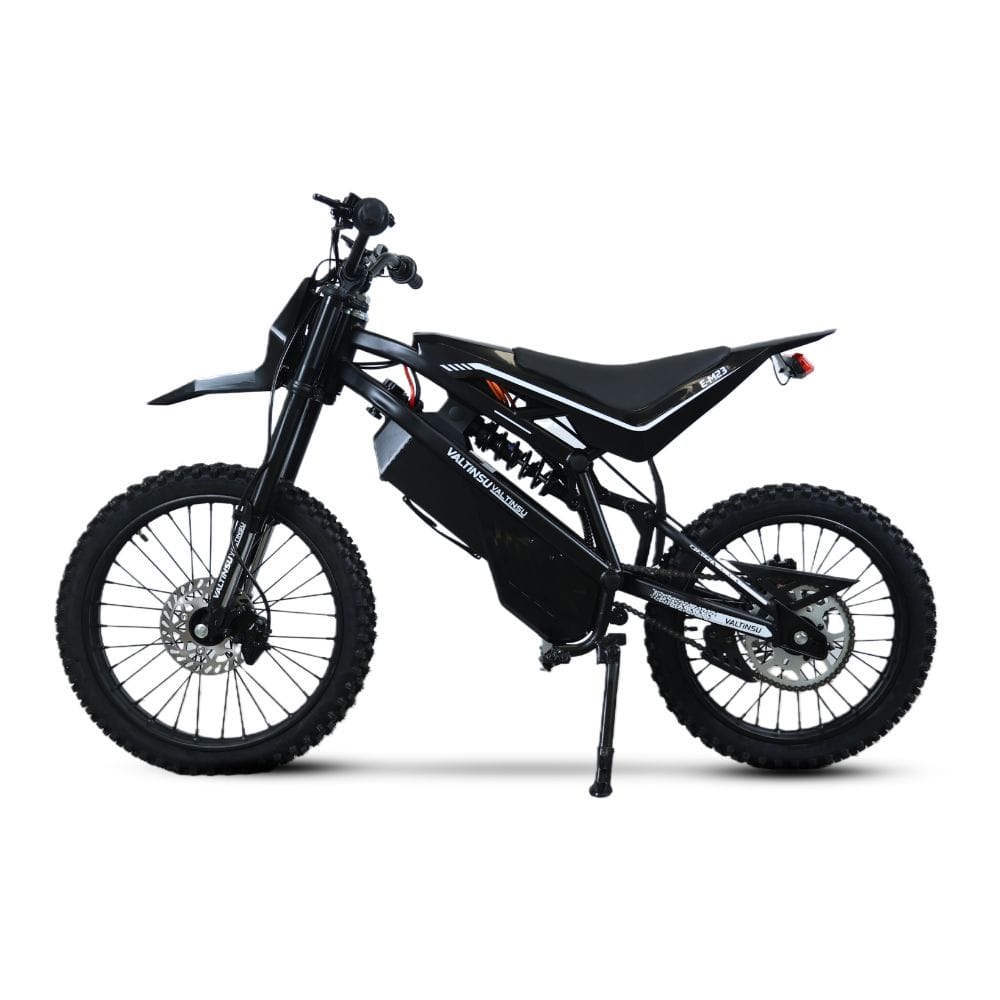
ELECTRIC DIRT BIKE
In general, a 250W electric motor can power an e-bike to around 15–20 mph, depending on the bike design, rider weight, battery, terrain, and speed restrictions. Some 250W e-bikes are rated at 20 mph, while others are limited to around 15.5 mph or 16 mph.
However, there is an important point to understand:
250 watts is a measurement of motor power, not speed.
A 250W motor does not automatically mean the vehicle will travel at a specific number of miles per hour.
For a typical electric bicycle, a 250W motor can reach approximately:
Motor Power | Typical Top Speed |
250W | 15–20 mph |
500W | 20–25 mph |
750W | 25–30+ mph |
1000W+ | 30 mph and above |
These numbers are only general ranges. The actual top speed depends heavily on the complete vehicle system.
For example, several 250W electric bikes on the market are designed around a 20 mph maximum speed. One 250W model lists a 20 mph top speed, while another 250W city e-bike is limited to 15.6 mph (25 km/h).
So, if you are asking “How many mph is 250 watts?”, a practical answer is roughly 15–20 mph for many e-bikes, rather than one fixed speed.
Not necessarily.
Two electric bikes can both use 250W motors but have different top speeds.
Why? Because motor power is only one part of the equation.
The controller, battery voltage, wheel size, gearing, rider weight, tire pressure, aerodynamics, and riding conditions all affect performance.
For example, a 250W e-bike with a lightweight frame and road-oriented tires may feel noticeably different from a heavier bike with wide tires and additional equipment.
This is why it is better to look at the claimed top speed and complete specifications rather than judging speed from wattage alone.
Rider weight has a direct effect on acceleration and the ability to maintain speed.
A lighter rider may reach the advertised top speed more easily, while a heavier rider may see lower real-world speeds, particularly when riding uphill.
This is especially noticeable with a relatively small 250W motor.
A 250W motor performs best on relatively flat roads and paved surfaces.
On a steep hill, the motor has to work harder to move the combined weight of the rider and vehicle. As a result, speed can drop significantly.
Wind and loose surfaces can have a similar effect.
Battery voltage also matters.
A common configuration for a 250W e-bike is a 36V battery paired with a 250W motor. However, the battery capacity, controller settings, and motor characteristics all influence how the system delivers power.
It is therefore not enough to look at the battery or motor rating separately.
Wheel size and tire selection can affect how efficiently a bike maintains speed.
Narrower road tires generally have less rolling resistance than wide off-road tires. On the other hand, larger or wider tires can provide better stability and traction on rough terrain.
The right setup depends on where the vehicle is designed to be used.
The controller determines how electrical power is delivered to the motor.
A manufacturer may limit the motor’s output or maximum speed to meet the requirements of a particular market or vehicle category.
That means the same basic 250W motor can be used in different vehicles with different performance characteristics.
For commuting and casual riding, 250W is often enough.
A 250W e-bike can provide useful assistance when starting from a stop, riding on flat roads, or dealing with moderate inclines. It is also a popular power level for lightweight urban and commuter e-bikes.
For example, the U.S. Department of Energy has documented an e-bike using a 250W motor with a maximum speed of 20 mph in its comparison data.
But if your main priority is high-speed riding, steep hills, heavy loads, or off-road performance, a higher-power motor may be more appropriate.
The difference becomes more noticeable when riding conditions become challenging.
A 500W motor generally provides more available power than a 250W motor. This can help with acceleration, hills, and heavier loads.
However, a 500W motor does not automatically mean double the top speed.
For example, if a 250W e-bike is designed to reach 20 mph, replacing the motor with a 500W unit does not necessarily make the bike capable of 40 mph.
The vehicle’s controller, gearing, battery, motor efficiency, and speed limitations still determine the final result.
This depends on what you mean by off-road riding.
For relatively smooth dirt paths and light recreational riding, a 250W electric bike may be adequate.
For steep trails, loose soil, sand, mud, or more demanding off-road conditions, riders generally need more torque and power.
This is one reason why electric dirt bikes and recreational e-bikes should not be compared only by their wattage.
A dirt bike is designed around a different combination of motor output, suspension, frame geometry, tires, brakes, and overall vehicle weight.
For manufacturers such as VALTINSU, the focus is not simply on putting a larger motor into a frame. A proper off-road vehicle needs the entire powertrain and chassis to work together.
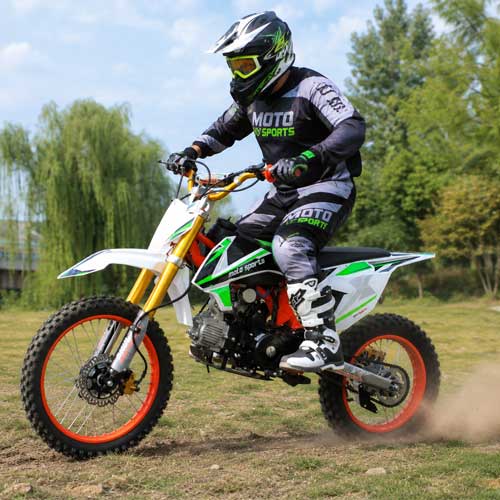
A 250W electric bike and a gas dirt bike are designed for very different riding experiences.
A 250W e-bike is generally more suitable for commuting, casual riding, and relatively light recreational use. It emphasizes smooth electric assistance, low noise, and simple operation.
A gas dirt bike, meanwhile, is built for off-road riding and typically delivers substantially more power than a 250W commuter e-bike.
For buyers comparing the two, it is better to consider:
Intended riding environment
Motor or engine output
Torque
Top speed
Suspension
Tire design
Braking system
Vehicle weight
Range or fuel capacity
Maintenance requirements
For distributors and wholesalers, these differences are also important when deciding which type of vehicle fits a particular market.
Motor power and riding range are two different specifications.
A 250W motor does not tell you how many miles the bike can travel on one charge.
Range depends primarily on factors such as:
Battery voltage and capacity
Rider weight
Riding speed
Terrain
Wind conditions
Pedal-assist level
Tire pressure
Temperature
A 250W e-bike with a larger battery may travel considerably farther than another 250W model with a smaller battery.
Therefore, when comparing electric bikes, look at motor power and battery capacity together.
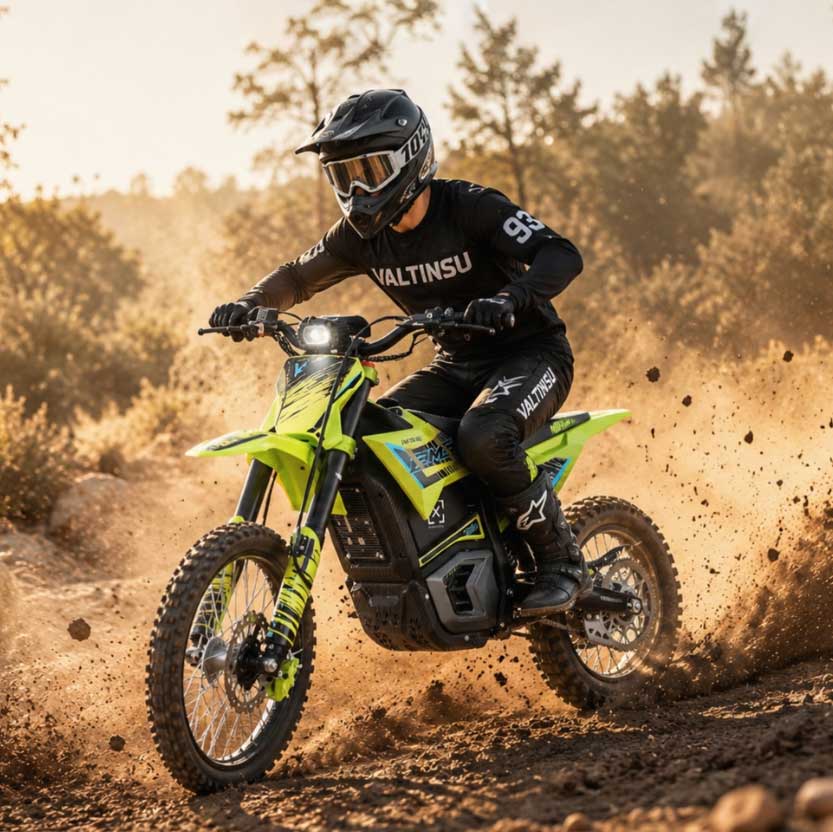
Yes, in many cases.
A 250W motor offers a relatively manageable level of electric assistance and can be a practical choice for riders who primarily use an e-bike for commuting, errands, or recreational riding.
The lower power output can also make the vehicle easier to control for riders who do not need aggressive acceleration.
That said, beginners should still pay attention to braking performance, riding position, tire grip, and the vehicle’s overall weight.
So, how fast is 250 watts in mph?
For many electric bikes, a reasonable expectation is around 15–20 mph. But there is no universal speed for a 250W motor.
If you are comparing electric vehicles, don’t choose a motor based on wattage alone. Look at the complete system, including the battery, controller, gearing, vehicle weight, tires, and intended riding environment.
For casual commuting, a 250W motor can be a practical and efficient choice. For demanding off-road riding, however, a purpose-built electric or gas dirt bike with a more suitable powertrain may be the better option.
For businesses sourcing off-road motorcycles, VALTINSU provides gas dirt bike solutions for distributors, wholesalers, and OEM partners looking for different engine sizes and market configurations.