

ELECTRIC DIRT BIKE
VALTINSU EM-5
EXPLORE MORE
ELECTRIC DIRT BIKE
VALTINSU EM-5 PRO
EXPLORE MORE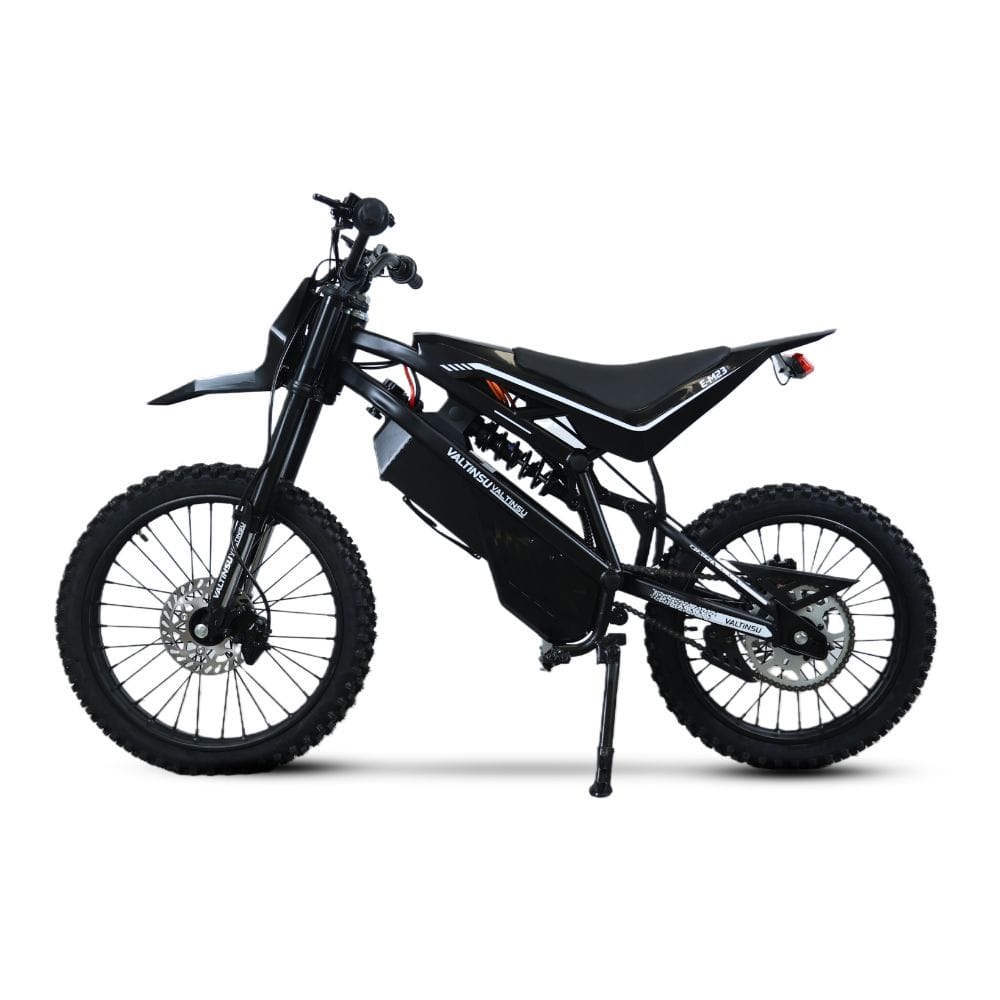
ELECTRIC DIRT BIKE
But how fast can a 750W e-bike actually go?
In most cases, a 750W e-bike can reach around 20–28 mph (32–45 km/h) when electronically limited for road use. Some models can go faster in off-road or unrestricted configurations, but actual speed depends on the battery, controller, motor setup, rider weight, terrain, tires, and local regulations.
So, 750W does not automatically mean one fixed top speed.
A typical 750W e-bike can reach approximately:
Riding Condition | Typical Speed |
Class 2 / electronically limited | Up to 20 mph (32 km/h) |
Class 3 pedal-assist | Up to 28 mph (45 km/h) |
Flat road, performance-oriented setup | Around 25–32 mph (40–51 km/h) |
Off-road or unrestricted models | Can exceed 28 mph |
For most buyers, 20–28 mph is the realistic range to expect from a 750W e-bike.
A 750W motor is not a guarantee that the bike will reach 30 mph or more. The motor is only one part of the system.
For example, two e-bikes can both use a 750W motor but have different top speeds because they use different batteries, controllers, wheel sizes, gearing, tires, or software settings.
The “750W” number refers to the motor’s rated power. It tells you how much electrical power the motor is designed to deliver under its rated operating conditions.
However, wattage should not be confused with top speed.
A higher-wattage motor generally gives an e-bike more ability to accelerate, climb hills, and carry additional weight. It does not automatically determine the final speed.
This is why a well-designed 500W e-bike can sometimes feel faster than a poorly matched 750W system.
For buyers comparing electric bikes, it is better to look at the complete system:
Motor power
Battery voltage
Controller current
Wheel size
Motor type
Gear ratio
Rider and cargo weight
Tire type
Speed limiter
Riding conditions
The combination of these factors determines how the bike performs in the real world.
There are two simple reasons: system design and speed regulations.
A manufacturer may intentionally limit the motor’s assistance to 20 mph or 28 mph. In the United States, for example, Class 1 and Class 2 e-bikes are generally limited to 20 mph, while Class 3 pedal-assist e-bikes can provide motor assistance up to 28 mph.
That means a 750W motor can be used in an e-bike with a 20 mph or 28 mph assisted-speed limit.
This is an important distinction:
Motor power ≠ legal speed limit.
Before choosing a fast e-bike, always check the regulations where you plan to ride. Rules can vary by country, state, city, and riding location.
For many riders, the biggest difference is not the motor itself but the speed setting.
A 20 mph setup is common for everyday commuting and general-purpose riding.
It works well for:
City streets
Bike lanes where permitted
Neighborhood riding
Recreational cycling
Short-distance commuting
At 20 mph, a 750W motor can still provide strong acceleration and useful hill-climbing performance.
A Class 3-style setup can provide pedal assistance up to 28 mph.
This higher speed is useful for riders who:
Commute longer distances
Ride on open roads where permitted
Want faster point-to-point travel
Prefer a more performance-oriented e-bike
However, 28 mph is considerably faster than a traditional bicycle. Braking performance, tires, frame stability, suspension, and rider experience become increasingly important.
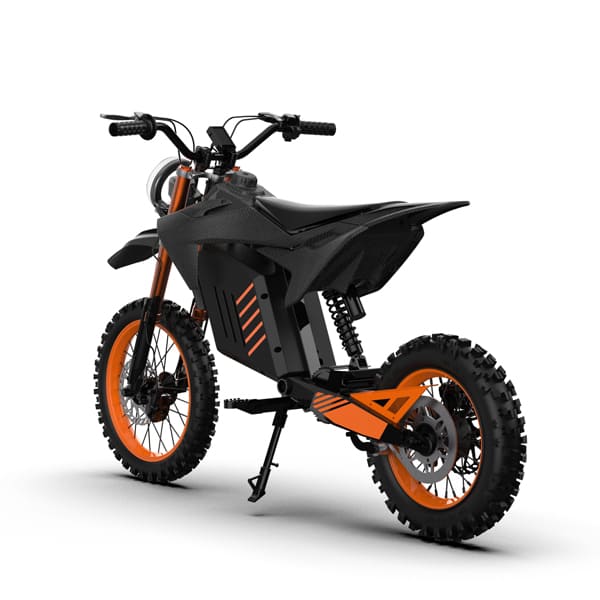
The number printed on the motor is only the starting point. Real-world speed can change significantly depending on the complete bike setup.
Battery voltage has a direct relationship with the electrical system.
A 750W motor paired with a well-matched 48V battery can perform differently from the same nominal motor paired with another voltage and controller combination.
The battery also needs to provide enough current for the controller and motor to operate effectively.
The controller determines how much electrical power is delivered to the motor.
A properly matched controller can improve acceleration and help the motor maintain performance under load.
However, simply installing a higher-current controller is not always an upgrade. The motor, battery, wiring, and thermal management all need to support the change.
A heavier rider requires more energy to accelerate and maintain speed.
The difference becomes more noticeable when riding uphill or accelerating from a stop.
This is one reason why manufacturers should test e-bikes under realistic load conditions rather than relying only on unloaded bench tests.
A 750W e-bike may reach its advertised top speed on a flat road but slow down considerably on a steep hill.
On the other hand, a downhill section can allow the bike to travel faster than its normal assisted speed.
For off-road riding, loose soil, rocks, grass, mud, and steep terrain create additional resistance.
Tires have a surprisingly large effect on e-bike performance.
Smooth road-oriented tires generally create less rolling resistance on pavement.
Wide knobby tires provide better traction on dirt and loose terrain but can reduce efficiency and top speed on asphalt.
This is especially important when comparing a commuter e-bike with an electric off-road motorcycle.
At higher speeds, wind resistance becomes increasingly important.
A rider sitting upright creates more aerodynamic drag than a rider in a lower riding position.
This is one reason why maintaining 28 mph requires significantly more effort than maintaining 20 mph.
An e-bike may feel strongest when the battery is fully charged.
As the battery voltage drops during a ride, available performance can also decrease depending on the battery management system, controller, and motor configuration.
For this reason, real-world top speed can vary during a long ride.
For many riders, yes.
One of the main reasons people choose a 750W e-bike instead of a lower-powered model is improved acceleration and hill performance.
However, hill-climbing ability is not determined by wattage alone.
A 750W system with strong torque, an appropriate controller, and suitable gearing can perform well on moderate hills. Rider weight and gradient still make a major difference.
If your main priority is steep off-road climbing, look beyond the 750W number and check:
Peak torque
Battery voltage
Controller output
Motor type
Wheel size
Gear ratio
Total vehicle weight
For technical off-road riding, a purpose-built electric dirt bike can also make more sense than a conventional commuter e-bike.
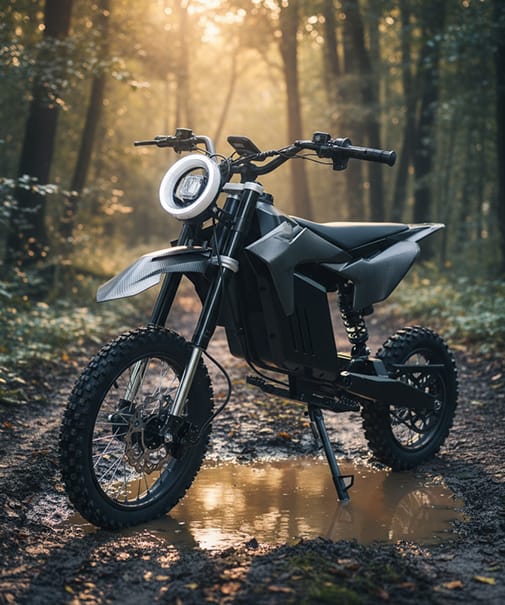
For most riders, a 750W e-bike is more than fast enough for everyday commuting.
At 20–28 mph, a rider can cover moderate distances quickly while still benefiting from pedal assistance.
The bigger advantage of a 750W system is not simply top speed. It is the combination of:
Faster acceleration
Better hill climbing
Stronger performance with heavier loads
More consistent power
Better performance on mixed terrain
For a distributor or retailer choosing products for different markets, these characteristics can be more important than advertising the highest possible top speed.
Motor Power | Typical Use | General Performance |
500W | Commuting, recreation | Good everyday performance |
750W | Commuting, hills, mixed terrain | Strong acceleration and versatile performance |
1000W+ | Performance and off-road riding | Higher power and stronger acceleration |
These figures should be treated as general comparisons rather than fixed speed categories.
A 1000W e-bike is not necessarily twice as fast as a 500W model. Top speed depends on the entire electrical and mechanical system.
For many buyers, 750W is a practical middle ground between everyday usability and higher-performance riding.
If you are comparing models, don’t choose based on the motor label alone.
A better checklist includes:
Motor: Check rated power, peak output, motor type, and torque.
Battery: Look at voltage, capacity, cell quality, and expected range.
Controller: Make sure the controller is properly matched to the motor and battery.
Brakes: Higher-speed e-bikes should have reliable braking systems.
Frame: A strong frame and stable geometry become more important as speed increases.
Tires: Choose road tires for pavement or knobby tires for off-road use.
Suspension: Consider front or full suspension if the bike will regularly be used on rough terrain.
Speed settings: Check whether the bike is configured for 20 mph, 28 mph, or another speed.
Certification and compliance: Make sure the configuration meets the requirements of your target market.
For B2B buyers, there is another consideration: whether the manufacturer can provide consistent specifications across production batches.
For manufacturers such as VALTINSU, speed is only one part of an electric off-road vehicle.
The company has experience across dirt bikes and electric off-road motorcycles, with models using different power levels and battery configurations. Its current electric product range includes models from entry-level systems to higher-performance electric off-road motorcycles.
For example, Valtinsu’s electric off-road models use configurations ranging from 500W systems to much higher-power platforms. That difference shows why it is better to evaluate an electric vehicle by its complete powertrain rather than looking at wattage alone.
For distributors and OEM buyers, factors such as OEM/ODM capability, quality control, product consistency, spare parts support, and compliance documentation can be just as important as top speed. Valtinsu positions its manufacturing business around OEM/ODM production and global distributor support.
The short answer is:
A typical 750W e-bike can reach around 20–28 mph (32–45 km/h), depending on its speed settings and configuration.
Some performance-oriented or unrestricted models can go beyond 28 mph, but that does not automatically make them suitable or legal for use on public roads.
If you are evaluating a 750W e-bike, look at the complete system rather than the motor number alone. Battery voltage, controller settings, motor design, rider weight, tires, terrain, and speed limits all affect the final result.
For buyers and distributors, the best 750W e-bike is not necessarily the one with the highest claimed top speed. It is the one that delivers the right combination of performance, reliability, safety, compliance, and value for its target market.