


ELECTRIC DIRT BIKE
VALTINSU EM-5
EXPLORE MORE
ELECTRIC DIRT BIKE
VALTINSU EM-5 PRO
EXPLORE MORE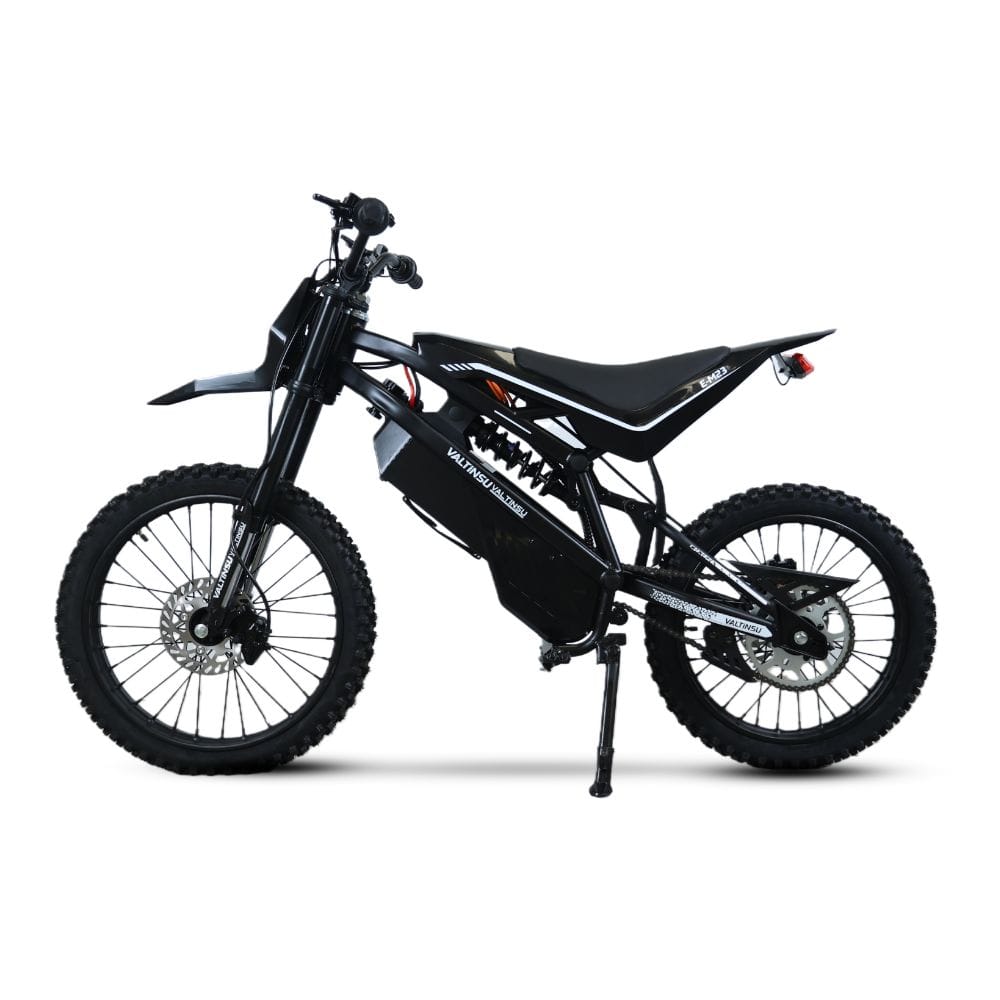
ELECTRIC DIRT BIKE
Unlike traditional street motorcycles, dirt bikes are built to handle rough terrain with specialized tires, long-travel suspension, high ground clearance, and lightweight frames. Whether you are interested in recreational trail riding, motocross racing, or exploring electric off-road motorcycles, understanding what a dirt bike is and how it works is the first step toward choosing the right model.
But are all dirt bikes powered by gasoline? Are dirt bikes street legal? And what is the difference between motocross, enduro, and trail bikes? In this beginner’s guide, we will explain the main features of dirt bikes, their different types, how they work, and what you should know before buying your first off-road motorcycle.
A dirt bike is a type of motorcycle specifically engineered for off-road riding. It is designed to travel over uneven surfaces where ordinary street motorcycles may struggle, including dirt paths, forest trails, sand, gravel, and motocross tracks.
The term “dirt bike” describes the motorcycle’s intended use rather than its power source. Traditional dirt bikes typically use gasoline engines, while modern electric dirt bikes use battery-powered electric motors to deliver off-road performance.
Most dirt bikes share several important characteristics:
Lightweight frame: Makes the motorcycle easier to maneuver through narrow trails and technical terrain.
Long-travel suspension: Helps absorb impacts from bumps, rocks, ruts, and jumps.
Knobby tires: Provide traction on loose dirt, mud, sand, and gravel.
High ground clearance: Helps prevent the underside of the motorcycle from hitting rocks and other obstacles.
Off-road-focused ergonomics: A narrow seat, upright riding position, and handlebars designed to support active rider movement.
These features allow dirt bikes to perform in environments where conventional road motorcycles are less suitable.
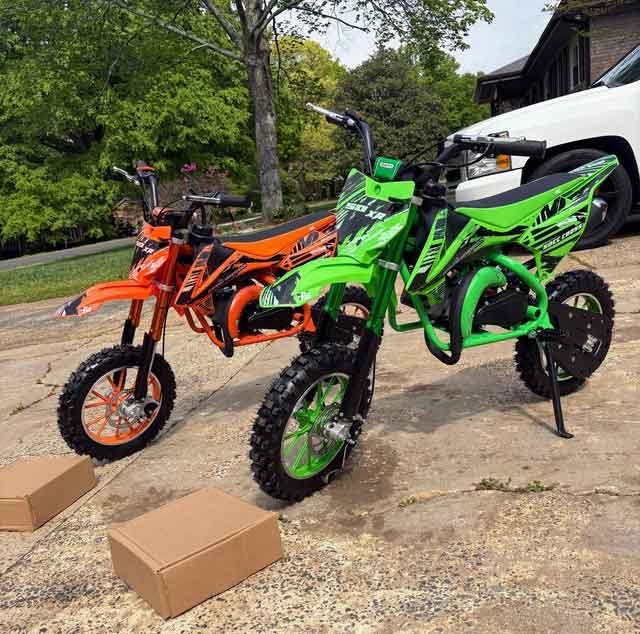
Dirt bikes are used for several types of off-road activities. The best type depends on the terrain, riding style, and experience level.
Trail riding is one of the most popular ways to enjoy a dirt bike. Riders explore natural off-road paths, forests, hills, and designated riding areas.
Trail bikes are generally designed to provide predictable handling, comfortable power delivery, and enough suspension travel to handle uneven terrain.
They are suitable for recreational riders who enjoy exploring rather than competing.
Motocross is a competitive off-road motorcycle sport that takes place on closed dirt tracks.
These tracks typically feature jumps, berms, sharp turns, and uneven surfaces. Motocross bikes are designed for high-performance riding, fast acceleration, and repeated impacts.
They usually feature lightweight frames, powerful engines, and performance-oriented suspension systems.
Enduro riding involves covering longer distances across challenging natural terrain.
Compared with motocross, enduro riding often includes forests, rocky trails, steep hills, mud, and technical obstacles.
Enduro motorcycles are designed to balance durability, maneuverability, and performance over extended rides. Some models include lighting and equipment for specific competition formats or road-use configurations, depending on their certification.
Not every dirt bike owner wants to race. Many riders simply enjoy riding on private property, designated off-road areas, or recreational trails.
For this type of riding, choosing a motorcycle with suitable power, manageable weight, reliable brakes, and comfortable suspension is often more important than maximum speed.
Dirt bikes look different from standard street motorcycles because their components are designed around off-road conditions.
Understanding these features can help beginners recognize what makes a dirt bike suitable for rough terrain.
A dirt bike typically has a narrow, lightweight frame that makes it easier to change direction and maneuver through tight trails.
Weight is particularly important when riding over obstacles or navigating technical sections. Riders can also influence the motorcycle’s balance by shifting their body weight forward, backward, or sideways.
A lighter motorcycle can be easier to control and recover when it becomes stuck or falls over, although the ideal weight depends on the rider’s strength and experience.
Suspension is one of the most important components of an off-road motorcycle.
Dirt bikes generally use front forks and rear suspension systems designed to absorb impacts from uneven terrain.
Long-travel suspension helps the motorcycle handle:
Rocks and tree roots.
Deep ruts and uneven trails.
Small and large jumps.
Sudden changes in terrain.
Hard landings during off-road riding.
A well-designed suspension system improves traction, stability, and rider comfort.
Dirt bikes use tires with raised tread patterns, commonly called knobby tires.
Unlike smooth road tires, these tires are designed to dig into loose surfaces and provide traction on dirt, mud, sand, and gravel.
Their tread patterns help riders maintain control when accelerating, braking, and turning on unpaved terrain.
However, aggressive off-road tires are generally less suitable for pavement. They may produce more noise, wear faster on asphalt, and provide different handling characteristics compared with street-focused tires.
Ground clearance refers to the distance between the lowest part of the motorcycle and the ground.
Dirt bikes typically have higher ground clearance than many street motorcycles, allowing them to pass over rocks, logs, roots, and other obstacles with less risk of damaging the underside.
This feature is particularly useful when riding on rocky trails or uneven terrain.
Most dirt bikes have handlebars and seats designed for an upright riding position.
This allows riders to move their bodies more freely while navigating obstacles.
Experienced off-road riders often stand on the foot pegs when riding over rough terrain. Standing helps them use their legs to absorb impacts and adjust the motorcycle’s balance.
Not all dirt bikes are designed for the same riding conditions. Different categories have different performance characteristics, suspension setups, and intended uses.
Here are some of the most common types.
Motocross bikes are built primarily for closed-course racing.
They typically feature high-performance engines, aggressive suspension, lightweight construction, and components designed to handle jumps and demanding track conditions.
They are best suited to experienced riders and competitive motocross environments.
Enduro bikes are designed for longer off-road rides and challenging natural terrain.
Compared with motocross models, they often prioritize broader usability, endurance, and performance across changing riding conditions.
Some enduro models are equipped with headlights, taillights, and other equipment, but this does not automatically make them street legal.
Trail bikes are designed for recreational off-road riding.
They often emphasize manageable power delivery, predictable handling, and comfort rather than maximum racing performance.
For beginners, a suitable trail bike can provide a more approachable introduction to off-road motorcycling.
Mini dirt bikes are smaller motorcycles designed for younger riders or riders who need a more compact vehicle.
They typically have smaller wheels, lower seat heights, and less powerful engines than full-size adult dirt bikes.
However, not all mini dirt bikes are intended for children. Some compact models are designed for adults, so always check the manufacturer’s recommended rider age, weight, and height.
Electric dirt bikes use battery-powered motors instead of traditional gasoline engines.
They are designed for off-road riding and can offer several advantages:
Instant torque delivery.
No conventional clutch or multi-speed gearbox on many models.
Lower routine engine-maintenance requirements.
Quieter operation than comparable gasoline motorcycles.
Adjustable power modes on some models.
Electric dirt bikes are available in different sizes and performance categories, from beginner-oriented models to high-performance electric motocross motorcycles.
Their suitability depends on battery capacity, motor output, suspension, rider size, and intended terrain.
For riders interested in this category, explore our Electric Dirt Bike collection.
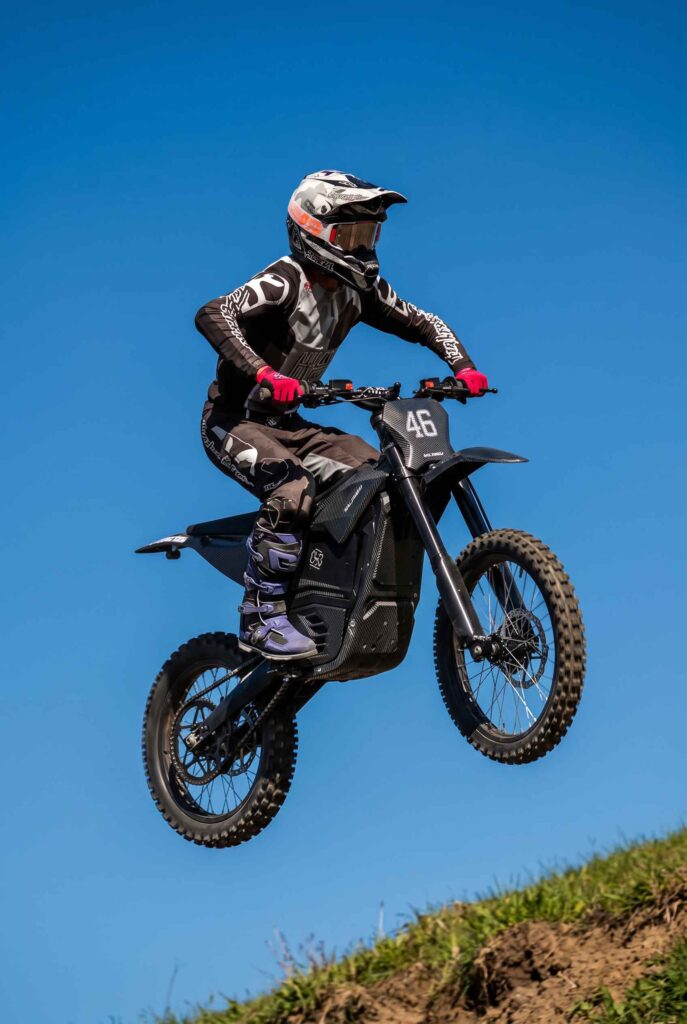
A dirt bike operates similarly to other motorcycles, but its components are optimized for off-road performance.
The main systems include the powertrain, drivetrain, suspension, braking system, and tires.
Traditional dirt bikes use internal combustion engines that burn gasoline to produce mechanical power.
The engine sends power through the transmission and drivetrain to the rear wheel.
Gas dirt bikes are commonly available with two-stroke and four-stroke engines.
Two-stroke engines generally have a simpler engine design and are known for strong power delivery relative to their size. They are commonly used in motocross and certain enduro applications.
Four-stroke engines complete their combustion cycle through four piston strokes. They are widely used in trail riding, motocross, and enduro motorcycles, with different engine configurations offering different power characteristics.
The right engine depends on the rider’s experience, maintenance preferences, and intended riding conditions.
Electric dirt bikes use rechargeable lithium-ion batteries to supply electricity to an electric motor.
When the rider opens the throttle, the controller regulates electrical power delivered to the motor, which drives the rear wheel.
Unlike most conventional gasoline dirt bikes, many electric models do not require traditional clutch operation or multi-speed gear changes.
Electric dirt bikes also eliminate engine oil changes and gasoline-related maintenance, although tires, brakes, chains, suspension, bearings, and batteries still require appropriate care.
The main considerations when choosing an electric dirt bike include battery capacity, motor performance, controller settings, charging time, and real-world riding range.
A dirt bike is technically a type of motorcycle. However, the two terms are often used to describe different categories of vehicles.
When people say “motorcycle,” they often mean a road-oriented motorcycle designed for paved streets and highways.
A dirt bike, on the other hand, is designed primarily for unpaved terrain.
| Feature | Dirt Bike | Street Motorcycle |
|---|---|---|
| Main purpose | Off-road riding | Road riding |
| Tires | Knobby off-road tires | Road-focused tires |
| Frame | Lightweight and narrow | Varies by motorcycle category |
| Suspension | Long-travel suspension | Usually optimized for paved surfaces |
| Ground clearance | Generally high | Varies by model |
| Riding position | Upright and active | Depends on motorcycle type |
| Road equipment | Often limited on off-road-only models | Usually includes required road equipment |
| Typical terrain | Dirt, sand, mud, trails | Asphalt and paved roads |
The main difference is the intended riding environment.
A dirt bike prioritizes maneuverability, traction, and impact absorption on rough terrain, while a street motorcycle is designed for stability, comfort, and control on paved roads.
Most off-road-only dirt bikes are not automatically street legal.
Many motocross and recreational trail motorcycles are manufactured without all the equipment or certification required for public-road use.
Depending on local regulations, a street-legal motorcycle may need:
Approved headlights and taillights.
Turn signals.
Mirrors.
A horn.
DOT-compliant tires.
Approved braking equipment.
Required emissions and noise compliance.
Vehicle registration and insurance.
Importantly, adding a headlight or turn signals does not automatically make an off-road motorcycle legal for public-road use.
Some motorcycles are specifically manufactured and certified for dual-purpose riding, meaning they can be used on both public roads and approved off-road routes.
Before purchasing, check the vehicle’s certification and registration requirements with your local motor vehicle authority.
It depends on whether the dirt bike is street legal and where you plan to ride.
If your motorcycle is designed exclusively for off-road use, you generally cannot legally ride it on public roads to reach a riding location.
In that situation, many owners transport their dirt bikes using:
Pickup trucks.
Motorcycle trailers.
Enclosed cargo trailers.
Suitable vehicle-mounted motorcycle carriers.
A street-legal dual-sport motorcycle may be ridden on approved public roads, subject to licensing and registration requirements.
Before purchasing a dirt bike, consider not only the motorcycle itself but also how you will transport it to your preferred riding locations.
Both gasoline and electric dirt bikes can deliver exciting off-road riding experiences, but their operating characteristics are different.
| Comparison | Gas Dirt Bike | Electric Dirt Bike |
|---|---|---|
| Power source | Gasoline engine | Rechargeable battery |
| Power delivery | Depends on engine and gearing | Immediate motor response |
| Transmission | Usually multi-speed | Often no conventional gearbox |
| Clutch | Common on many models | Often not required |
| Maintenance | Engine, oil, fuel system, drivetrain | Battery, motor system, drivetrain |
| Noise | Generally louder | Generally quieter |
| Refueling/charging | Quick refueling | Requires charging time |
| Riding range | Depends on fuel capacity and consumption | Depends on battery capacity and energy use |
| Riding experience | Traditional motorcycle feel | Smooth electric power delivery |
A gas dirt bike may be a good choice if you:
Prefer traditional motorcycle performance.
Want quick refueling during longer rides.
Enjoy two-stroke or four-stroke engine characteristics.
Ride in locations where charging infrastructure is limited.
Prefer a conventional engine and transmission setup.
An electric dirt bike may be a better choice if you:
Prefer smooth and responsive acceleration.
Want to avoid conventional engine maintenance.
Value quieter off-road operation.
Prefer riding without managing a traditional clutch and gearbox.
Have convenient access to charging.
Neither option is universally better. The right choice depends on your budget, riding environment, experience, and personal preferences.
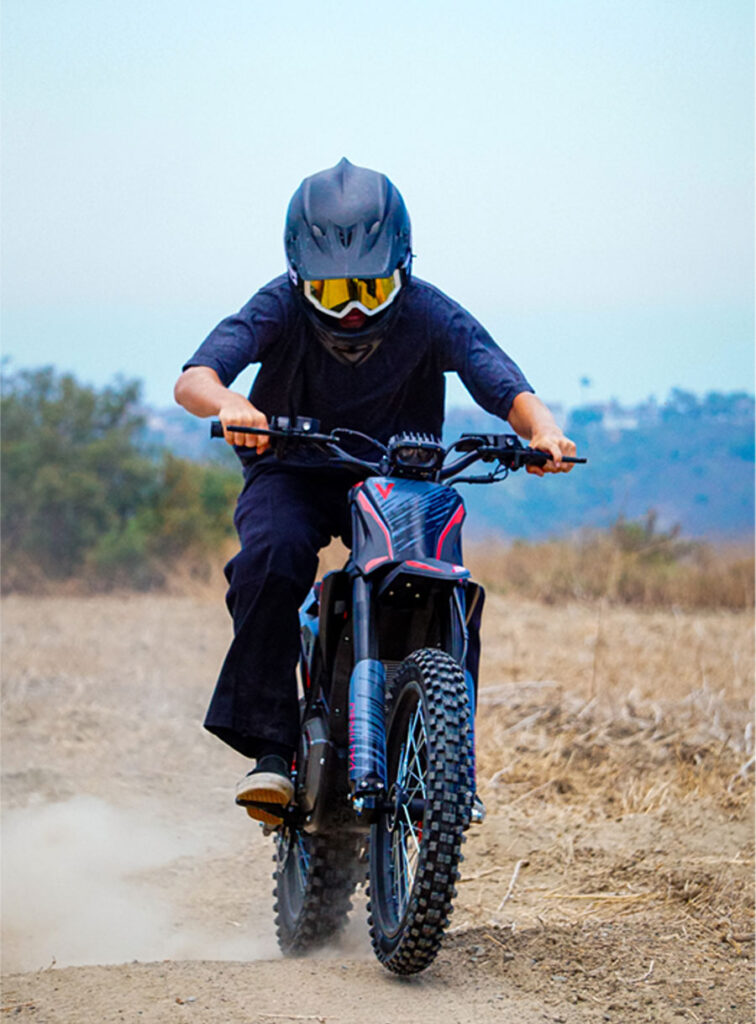
If you are new to off-road motorcycling, choosing the right dirt bike is more important than choosing the most powerful model.
Here are five factors to consider.
Beginners should prioritize predictable handling and manageable power.
A motorcycle that is too powerful or too heavy can make learning difficult. Choose a model that matches your current skill level rather than purchasing solely for future performance.
Gas-powered dirt bikes are available with different engine sizes, including 50cc, 110cc, 125cc, 150cc, and 250cc models.
Engine displacement is only one part of performance. Engine tuning, power delivery, motorcycle weight, and transmission setup also affect how a dirt bike feels.
Electric dirt bikes use motor power ratings and battery specifications instead of engine displacement.
A motorcycle should fit the rider comfortably.
Check the seat height, wheel size, handlebar position, and overall dimensions before purchasing.
Riders should be able to maintain a comfortable and controlled riding position when stopping and maneuvering.
Think about where you plan to ride.
Motocross tracks require performance-oriented suspension and handling.
Forest trails benefit from manageable power and good maneuverability.
Rocky terrain requires suitable ground clearance and suspension.
Recreational riding may prioritize comfort and predictable performance.
A dirt bike is exposed to mud, dust, water, vibration, and repeated impacts.
Before buying, check the availability of replacement parts, maintenance support, warranty coverage, and the long-term cost of ownership.
A motorcycle with accessible replacement parts and reliable after-sales support can make ownership much easier.
A dirt bike is more than just a motorcycle with off-road tires. Its lightweight construction, long-travel suspension, high ground clearance, and specialized tires make it suitable for riding on challenging unpaved terrain.
From motocross and enduro racing to recreational trail riding, different dirt bikes are designed to meet different needs.
The choice between gasoline and electric power is another important consideration. Traditional gas dirt bikes offer familiar engine performance and quick refueling, while electric dirt bikes provide responsive acceleration, quieter operation, and fewer conventional engine-maintenance tasks.
Before purchasing, consider your experience level, preferred terrain, rider size, budget, and local riding regulations.
Understanding these differences will help you choose a dirt bike that fits your riding goals and provides a more enjoyable off-road experience.
Explore the Valtinsu Electric Dirt Bike Collection to learn more about electric off-road motorcycles and compare models for different riding needs.
Yes. A dirt bike is a type of motorcycle designed primarily for off-road riding. It differs from road motorcycles in its frame design, tires, suspension, ground clearance, and intended use.
No. Dirt bikes can use gasoline engines or electric motors. Electric dirt bikes are becoming an increasingly popular option for riders who want off-road performance without a conventional gasoline engine.
A motocross bike is a specific type of dirt bike designed primarily for closed-course racing. Dirt bike is a broader term that also includes trail bikes, enduro bikes, and other off-road motorcycles.
Yes. Many dirt bikes are designed for beginner and recreational riders. However, beginners should choose a motorcycle with suitable power, weight, seat height, and handling characteristics.
Off-road dirt bikes can physically travel on pavement, but their tires, suspension, and overall design are generally optimized for unpaved surfaces. Riding them on public roads may also be illegal without the required road certification and equipment.
Yes. The term dirt bike refers to the vehicle’s intended use, not whether it uses gasoline or electricity. Electric dirt bikes are motorcycles designed for off-road riding and can range from beginner-friendly models to high-performance machines.
Most traditional gas-powered dirt bikes use a multi-speed transmission. Many electric dirt bikes use a direct-drive or single-speed drivetrain and do not require conventional gear shifting.
Some dirt bikes have headlights, while others do not. Motocross bikes are commonly designed without road lighting, while certain enduro and dual-sport models include lighting systems. However, a headlight alone does not establish street legality.