


ELECTRIC DIRT BIKE
VALTINSU EM-5
EXPLORE MORE
ELECTRIC DIRT BIKE
VALTINSU EM-5 PRO
EXPLORE MORE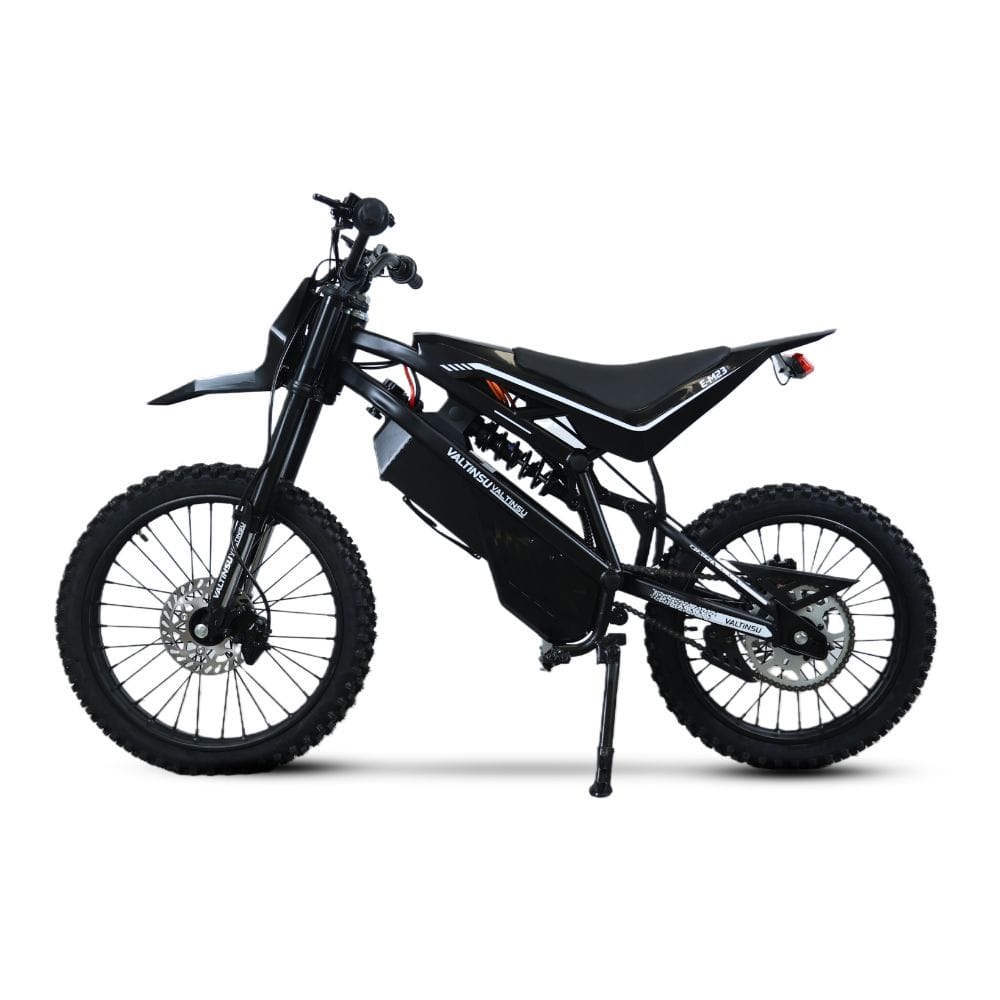
ELECTRIC DIRT BIKE
Yes — 70 mph is fast for a dirt bike.
70 mph is approximately 113 km/h, which is a serious speed on an off-road motorcycle. On a motocross track or open private land, a bike capable of 70 mph has plenty of performance for most recreational riders. On a tight trail, however, you may rarely use the bike’s full top speed.
The important thing is that dirt bike speed is not just about the number on the speedometer.
Engine size, gearing, rider weight, tires, terrain, suspension and the type of dirt bike all make a difference.
A 70 mph motocross bike and a 70 mph dual-sport motorcycle may have very different characteristics, even if their advertised top speed is similar.
So the better question is:
Is 70 mph appropriate for the type of dirt bike, rider and terrain?
70 mph is approximately 112.7 km/h.
That is considerably faster than the speed many people associate with a beginner dirt bike.
For perspective:
Top Speed | Approx. km/h | Typical Dirt Bike Category |
30 mph | 48 km/h | Small / beginner bikes |
40 mph | 64 km/h | Small trail bikes |
50 mph | 80 km/h | Entry-level adult bikes |
60 mph | 97 km/h | Mid-performance bikes |
70 mph | 113 km/h | Fast adult dirt bikes |
80 mph | 129 km/h | High-performance bikes |
90+ mph | 145+ km/h | Performance / race-oriented |
These numbers are only broad guidelines.
A manufacturer’s claimed top speed is not necessarily the speed a rider will see in normal off-road riding.
For most riders, yes.
A dirt bike capable of 70 mph has enough top-end performance for fast trail riding, open private land and many types of off-road riding.
But there is an important difference between being able to reach 70 mph and riding at 70 mph regularly.
On a wide, smooth dirt road, 70 mph can be possible for a suitable bike under the right conditions.
On a narrow trail with:
Rocks
Roots
Trees
Mud
Jumps
Tight corners
Uneven surfaces
70 mph would be extremely fast.
In those environments, acceleration, braking, suspension and rider control are usually more useful than another 10 or 20 mph of top speed.
The same speed can feel very different depending on the vehicle.
A 70 mph road motorcycle may feel relatively stable because it has been designed around higher-speed road use.
A lightweight dirt bike with knobby tires and long-travel suspension can feel much more active at the same speed.
At 70 mph:
You cover about 103 feet per second
Wind resistance becomes significant
Small steering inputs matter more
Tire grip becomes increasingly important
Braking performance becomes critical
Terrain changes arrive very quickly
This is why dirt bike speed should always be considered together with the terrain.
A bike that feels manageable at 70 mph on a smooth surface may feel completely different on loose gravel or rough dirt.
There is no single engine size that guarantees a 70 mph top speed.
Different types of dirt bikes can reach similar speeds for very different reasons.
Some performance-oriented 125cc bikes can approach 70 mph, particularly with suitable gearing and ideal conditions.
However, many recreational 125cc four-stroke dirt bikes are slower.
Valtinsu’s own 125cc dirt bike content places typical 125cc performance broadly around 45–70 mph, depending on engine type, gearing, rider weight and setup.
So a 70 mph 125cc is possible, but it should not be treated as a universal specification for every 125cc dirt bike.
A 150cc dirt bike can also reach around 70 mph.
Valtinsu’s research on 150cc models puts many bikes in the 55–75 mph range, with entry-level trail models generally slower and performance-oriented bikes reaching the upper end.
This is where 70 mph becomes much less unusual.
Many 250cc dirt bikes can reach approximately 65–85 mph, depending on whether they are designed for trail riding, motocross or other performance applications.
For an adult rider looking specifically for a dirt bike around 70 mph, a 250cc platform can therefore be a more natural fit than trying to push a smaller engine to its limit.
A rough comparison looks like this:
Engine Size | Typical Speed Range* | General Use |
50cc | 25–35 mph | Small / beginner riding |
70–90cc | 30–45 mph | Youth / recreational |
110–125cc | 45–70 mph | Trail / beginner adult |
150cc | 55–75 mph | Recreational adult riding |
200cc | 60–80 mph | Trail / adult riding |
250cc | 65–85+ mph | Adult / performance |
450cc | 90+ mph | High-performance / racing |
*Actual speed varies by model and configuration.
These ranges should not be treated as specifications.
The same engine size can produce very different results depending on gearing, weight, tuning and the manufacturer’s design priorities.
It is tempting to think:
Bigger engine = faster dirt bike.
There is some truth to that, but it is not the whole picture.
Two bikes with similar engine sizes can have different top speeds because of:
A bike geared for acceleration will behave differently from one geared for higher top speed.
A heavier rider puts more load on the engine and can reduce acceleration and maximum speed.
Knobby off-road tires provide traction in dirt but create more rolling resistance than road-oriented tires.
Loose dirt, mud, sand and hills can dramatically change actual speed.
At higher speeds, wind resistance becomes increasingly important.
Fuel system, exhaust, intake and other engine characteristics affect performance.
So when comparing dirt bikes, don’t look at engine displacement alone.
For a new rider, 70 mph is a lot of performance.
That does not mean the bike itself is necessarily unsuitable, but beginners should not assume they need to reach the bike’s maximum speed.
A new rider has to learn:
Throttle control
Braking
Cornering
Body position
Gear selection
Weight transfer
Reading the terrain
Those skills matter more than maximum speed.
A smaller or more manageable dirt bike can often be a better learning platform than a high-performance machine.
As experience increases, riders can decide whether they actually need more power.
Usually, yes.
Trail riding is rarely about maintaining maximum speed.
A typical trail may include a mixture of:
Tight corners
Steep climbs
Descents
Rocks
Roots
Mud
Sand
Narrow sections
In these conditions, a dirt bike with strong low-end torque and good suspension may be more useful than one with an extremely high top speed.
For example, a bike that reaches 80 mph but has poor suspension may be less enjoyable on rough trails than a bike that reaches 70 mph but has better control and traction.
Off-road performance is not measured by top speed alone.
A motocross track is a different environment.
Tracks can have:
Long straights
Jumps
Berms
Fast corners
Technical sections
Here, acceleration and suspension performance become especially important.
A rider may reach high speeds on a straight section and then need to reduce speed quickly before a corner or jump.
This makes the complete package important:
Engine → Gearing → Suspension → Tires → Brakes → Rider
A high top speed is useful only if the rest of the bike can support it.
If you’re choosing a dirt bike, don’t make top speed your only filter.
For an adult dirt bike, I would pay close attention to:
Look at how the engine delivers power rather than only the peak output.
Good suspension can make a major difference on uneven terrain.
Higher speed means more demand on the braking system.
The correct tire can make a bigger difference off-road than another 5 mph of top speed.
The bike needs to be designed for the intended rider weight and terrain.
Seat height, handlebar position and rider position affect control.
For recreational and commercial use, consistent performance is usually more valuable than a theoretical maximum speed.
The move from gas to electric makes the comparison more interesting.
Electric dirt bikes deliver power differently from combustion engines.
An electric motor can provide strong torque immediately, which makes acceleration feel very different from a gas engine.
For example, Valtinsu’s electric off-road range includes models designed for substantially higher performance than 70 mph.
The VTC001 is listed at 90+ km/h, while the VTC003 is listed at 100+ km/h. The higher-performance VTC004 and VTC006 are listed around 120+ km/h, depending on configuration.
The VTC005 sits at the top end of the current range, with a listed top speed of 130+ km/h and a 72V 5000W system.
That means a 70 mph dirt bike is not necessarily at the upper end of electric dirt bike performance.
70 mph is about 113 km/h, so several full-size electric dirt bikes are already capable of exceeding that figure.
A high-speed electric dirt bike needs more than a powerful motor.
The complete system has to work together.
Higher-performance riding requires a battery capable of delivering sufficient current.
The motor needs to provide both acceleration and sustained performance.
The controller manages how power reaches the motor.
Higher speed over uneven ground places greater demands on suspension.
Hydraulic disc brakes and appropriate brake sizing become increasingly important as performance rises.
The tires need to match the intended terrain and speed.
Valtinsu’s higher-performance electric models, for example, use combinations of large battery systems, adjustable suspension, hydraulic disc brakes and off-road tires rather than relying on motor power alone.
Absolutely not.
Top speed is a capability, not a recommended riding speed.
A rider might buy a dirt bike capable of 70 mph and spend most of the time riding at:
30 mph on trails
40 mph on open dirt
50 mph on faster sections
The available performance simply gives the rider more headroom.
This is similar to buying a car capable of 150 mph without driving at 150 mph every day.
For most off-road riding, control and terrain awareness matter more.
So, is 70 mph fast for a dirt bike?
Yes.
At around 113 km/h, 70 mph is a serious top speed for an off-road motorcycle. For many recreational riders, it is more than enough.
But the number only tells part of the story.
A good dirt bike is not simply the one with the highest speed. The better choice depends on how the bike delivers its power, how well the suspension and brakes work, what tires it uses, and where you plan to ride.
For an adult recreational rider, a well-designed 150cc or 250cc dirt bike capable of around 70 mph can provide plenty of performance.
For riders looking at electric alternatives, full-size electric dirt bikes can now go well beyond 70 mph. Valtinsu’s current range includes models listed above 100 km/h, with the VTC005 reaching a claimed 130+ km/h.
The real question is not:
“How fast can the dirt bike go?”
It is:
“How much performance do I actually need for the way I ride?”
That is usually a much better starting point when choosing a dirt bike.