


ELECTRIC DIRT BIKE
VALTINSU EM-5
EXPLORE MORE
ELECTRIC DIRT BIKE
VALTINSU EM-5 PRO
EXPLORE MORE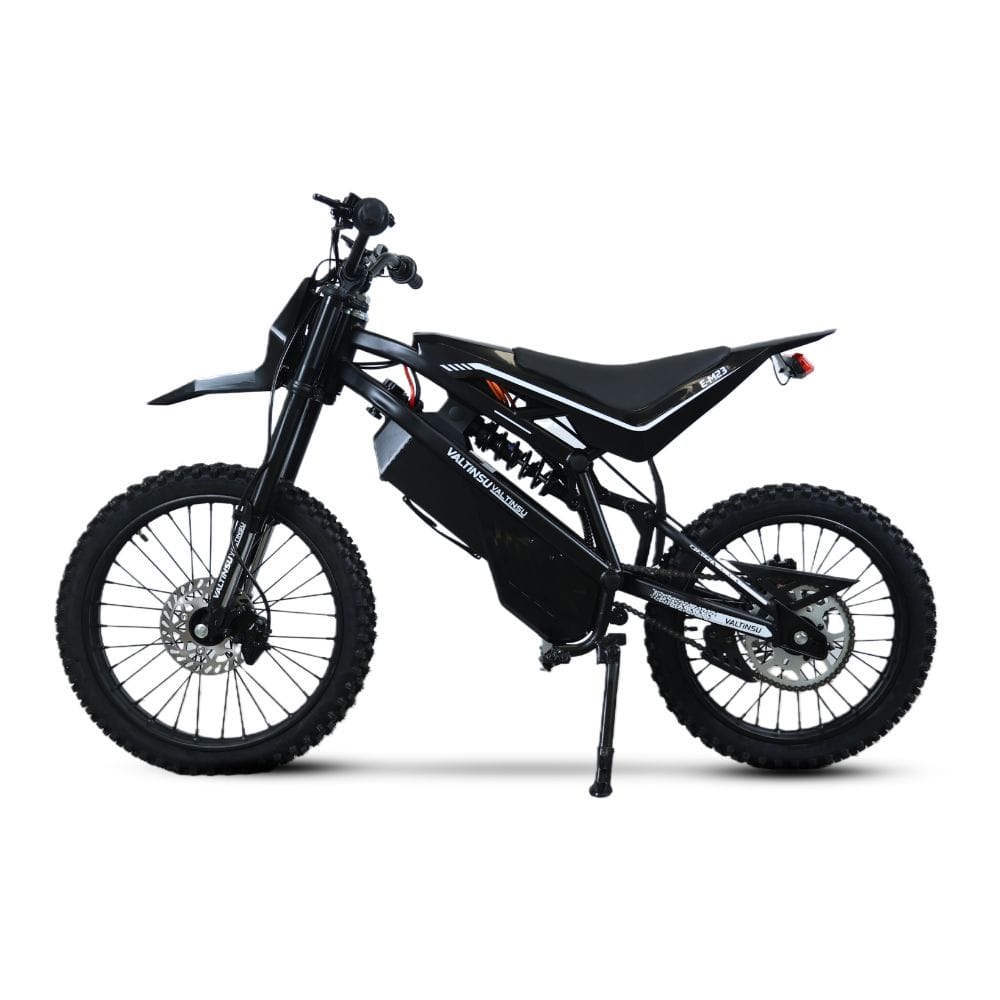
ELECTRIC DIRT BIKE
But they are not perfect.
If you are thinking about buying an electric bike, one question comes up sooner or later:
What is the biggest problem with electric bikes?
For most riders, there is not one single problem.
The biggest limitation is usually the battery and charging system. Unlike a conventional bicycle, an electric bike depends on a battery for its assisted performance. Range, charging time, battery condition, replacement cost and access to charging can all affect how practical the bike is.
For electric dirt bikes, the issue becomes even more important because off-road riding often requires more power and puts greater demands on the battery.
So instead of asking which electric bike has the biggest battery, it is better to look at the complete system:
Battery → Range → Charging → Performance → Maintenance → Intended Use
This guide looks at the main disadvantages of electric bikes and explains what buyers should consider before choosing one.
The biggest practical problem with electric bikes is usually limited range compared with the time and convenience of refuelling a gasoline-powered bike.
The main issues include:
Battery range can vary significantly in real-world riding.
Charging takes longer than refuelling a gas bike.
Battery replacement can be expensive.
Higher-power electric bikes can become heavy.
Performance can change as battery charge gets low.
Charging infrastructure is less convenient in some locations.
For electric dirt bikes, long-distance or high-speed off-road riding can put significant demands on the battery.
The right question is therefore not:
“Are electric bikes good or bad?”
It is:
“Does an electric bike fit the way I actually plan to ride?”

Range is probably the first thing most buyers notice.
A manufacturer may advertise a maximum range under particular testing conditions, but real-world range can be very different.
Battery consumption depends on:
Rider weight
Terrain
Riding speed
Temperature
Wind
Tire pressure
Riding mode
Motor output
Battery condition
Frequency of acceleration
A bike riding slowly on flat ground can use considerably less energy than the same bike climbing hills at high speed.
This is especially relevant for electric dirt bikes.
Off-road riding often involves:
Steep climbs
Loose surfaces
Frequent acceleration
Uneven terrain
Higher motor loads
All of these can increase energy consumption.
So a useful rule is:
Advertised range is a reference, not a guarantee.
This is one of the biggest differences between electric and gasoline-powered bikes.
With a gas dirt bike, you can stop, refuel and continue riding within a few minutes.
An electric bike normally needs considerably more time to recharge.
Charging time depends on:
Battery capacity
Charger output
Battery state of charge
Battery chemistry
Charger design
For everyday commuting, this may not be a major problem.
You can simply charge the bike overnight.
For long recreational rides, however, charging becomes more important.
If your riding plan involves several hours away from a charging point, battery capacity and charging options need to be considered before you start.
The battery is one of the most important and expensive components of an electric bike.
Like other rechargeable batteries, an e-bike battery gradually loses capacity over time.
Battery life depends on factors such as:
Charging habits
Storage temperature
Usage frequency
Depth of discharge
Battery quality
Cell quality
Charging system
Eventually, a replacement may be required.
This is one reason buyers should look beyond the initial purchase price.
A cheaper electric bike may not necessarily have the lowest long-term cost if its battery, charger or replacement parts are difficult to source.
For distributors and dealers, this becomes even more important.
Battery availability is part of the product, not an afterthought.
An electric bike has additional components that a conventional bicycle does not need.
These include:
Motor
Battery
Controller
Wiring
Display
Additional structural components
A high-performance electric dirt bike can be considerably heavier than a lightweight bicycle because it needs a larger motor, battery and stronger chassis.
Weight affects:
Handling
Transportation
Acceleration
Braking
Suspension requirements
Ease of lifting
For an urban commuter, additional weight may be manageable.
For technical off-road riding, it can become much more noticeable.
It is easy to assume that more motor power automatically makes an electric bike better.
It doesn’t.
More power can mean:
Faster acceleration
Higher top speed
Greater energy consumption
More heat
Higher battery demand
Greater demands on brakes and suspension
This is especially obvious with electric dirt bikes.
A high-performance model needs a complete system capable of handling the additional output.
For example, Valtinsu’s higher-performance electric off-road motorcycles use larger battery systems, higher-voltage electrical systems, stronger suspension and hydraulic braking systems.
The VTC005 is listed with a 72V 5000W motor system and a claimed top speed of 130+ km/h.
At that performance level, battery, controller, suspension, brakes and tires all become important parts of the package.
The lesson is simple:
More power is useful only when the rest of the bike can support it.
This is particularly important for electric dirt bikes.
If you ride at low speed on relatively flat terrain, the motor may consume energy relatively slowly.
If you ride aggressively, the situation changes.
Hard acceleration, steep climbs and high-speed riding can increase energy consumption significantly.
For example:
Lower speed + smooth terrain + moderate acceleration
→ Lower energy consumption
Higher power demand + hills + loose terrain + frequent acceleration
→ Higher energy consumption
This means two riders using the same electric dirt bike can get very different real-world range.
For a commuter, charging may be simple.
You ride home, plug the bike in and charge it overnight.
For someone travelling long distances, the situation is different.
You need to know:
Where you can charge
How long charging takes
Whether the charger is compatible
Whether you can remove the battery
Whether charging is available at your destination
This can be more difficult for electric dirt bike riders.
Off-road trails and private riding areas do not necessarily have convenient charging facilities.
That makes battery capacity more important for recreational riders.
Temperature matters for rechargeable batteries.
Very cold conditions can affect:
Available capacity
Charging behaviour
Power delivery
Overall range
This does not mean an electric bike cannot be used in cold weather.
It means buyers should understand that advertised performance is normally based on particular testing conditions.
For riders in colder European climates, including parts of France, Germany and Scandinavia, temperature should be considered when estimating winter range.
Modern electric bikes are designed to be used outdoors, but that does not mean every electrical component is completely waterproof.
Buyers should understand the manufacturer’s instructions regarding:
Heavy rain
Water crossings
Pressure washing
Battery storage
Charging in wet conditions
Long-term storage
This is especially important for electric dirt bikes because off-road riding can expose the vehicle to mud and water.
A manufacturer should provide clear guidance on how the bike should be cleaned and stored.
Electric bikes can be mechanically simpler in some areas.
For example, an electric motor does not require the same engine maintenance as a gasoline engine.
There is no:
Engine oil
Spark plug
Fuel injector
Exhaust system
Traditional engine air filter system
But electric bikes introduce a different type of technical system.
Dealers and service technicians may need to understand:
Battery systems
Controllers
Electrical connections
Sensors
Chargers
Displays
Motor diagnostics
This is particularly important for B2B buyers.
A distributor is not only selling a bike.
They are also selling the ability to support that bike after the sale.
This is one of the most overlooked problems when buying an electric bike.
A bike may look attractive online, but what happens if something fails six months later?
Can you get:
A replacement battery?
A charger?
Brake components?
Controller?
Motor parts?
Display?
Wiring?
Suspension components?
For individual consumers, this affects ownership convenience.
For dealers and distributors, it can directly affect customer satisfaction and warranty costs.
This is why supplier selection matters.
A reliable electric bike manufacturer should be able to provide not only finished vehicles but also an appropriate spare-parts supply and after-sales support system.
It is important not to treat all electric bikes as one category.
A pedal-assisted city e-bike and a high-performance electric dirt bike may both use batteries and electric motors, but their requirements are very different.
Typical priorities:
Range
Weight
Comfort
Charging convenience
Pedal assistance
Practicality
Typical priorities:
Motor output
Torque
Battery capacity
Suspension
Ground clearance
Tires
Brakes
Durability
Off-road range
A problem that matters on one type of electric bike may not matter as much on another.
If you are specifically comparing electric dirt bikes with gasoline dirt bikes, the differences become clearer.
Factor | Electric Dirt Bike | Gas Dirt Bike |
Starting | Push-button / electric start | Electric or kick start depending on model |
Refuelling | Charging required | Fast refuelling |
Noise | Very low | Much louder |
Local emissions | No exhaust emissions during riding | Exhaust emissions |
Maintenance | Generally fewer engine-related tasks | More engine-related maintenance |
Torque delivery | Immediate motor response | Engine-dependent |
Long rides | Battery capacity is important | Easy refuelling |
Charging | Requires access to electricity | Fuel widely available |
Powertrain | Battery + motor + controller | Engine + fuel system + transmission |
Neither system is perfect.
Electric is attractive for riders who value quiet operation, immediate power and lower routine powertrain maintenance.
Gas remains attractive for riders who want quick refuelling and long-distance riding without depending on charging.
For many users, yes.
Electric bikes have several advantages that can offset the range issue.
They are generally:
Quiet
Easy to start
Simple to operate
Convenient for short rides
Well suited to repeated stop-and-go use
The trade-off is that the rider needs to plan around battery capacity.
This creates a simple difference:
Gas bike:
Fuel → Ride → Refuel → Ride
Electric bike:
Charge → Ride → Recharge → Ride
For short daily trips, charging may barely be noticeable.
For long-distance off-road riding, it can become one of the biggest considerations.
So, what is the biggest problem with electric bikes?
For most riders, it comes down to energy.
You need enough battery capacity for the ride, enough charging access to recharge it, and a battery system that remains practical over the life of the bike.
But that does not make electric bikes a poor choice.
For short trips, commuting and recreational riding, the convenience of quiet operation, easy starting and electric power can outweigh the limitations.
For electric dirt bikes, the decision is more demanding. High-speed riding and difficult terrain can consume considerably more energy, so battery capacity, charging time and after-sales support become much more important.
For buyers and distributors, the smartest approach is to evaluate the complete product:
Battery + Motor + Chassis + Range + Charging + Parts + Support
The best electric bike is not the one with the biggest battery or the highest motor output.
It is the one that matches the rider, the terrain and the intended application.