
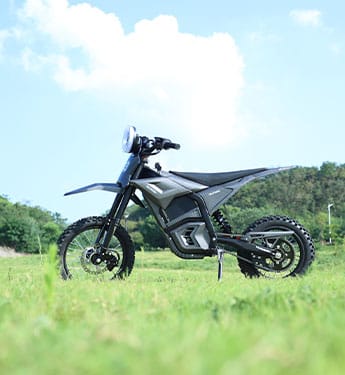

ELECTRIC DIRT BIKE
VALTINSU EM-5
EXPLORE MORE
ELECTRIC DIRT BIKE
VALTINSU EM-5 PRO
EXPLORE MORE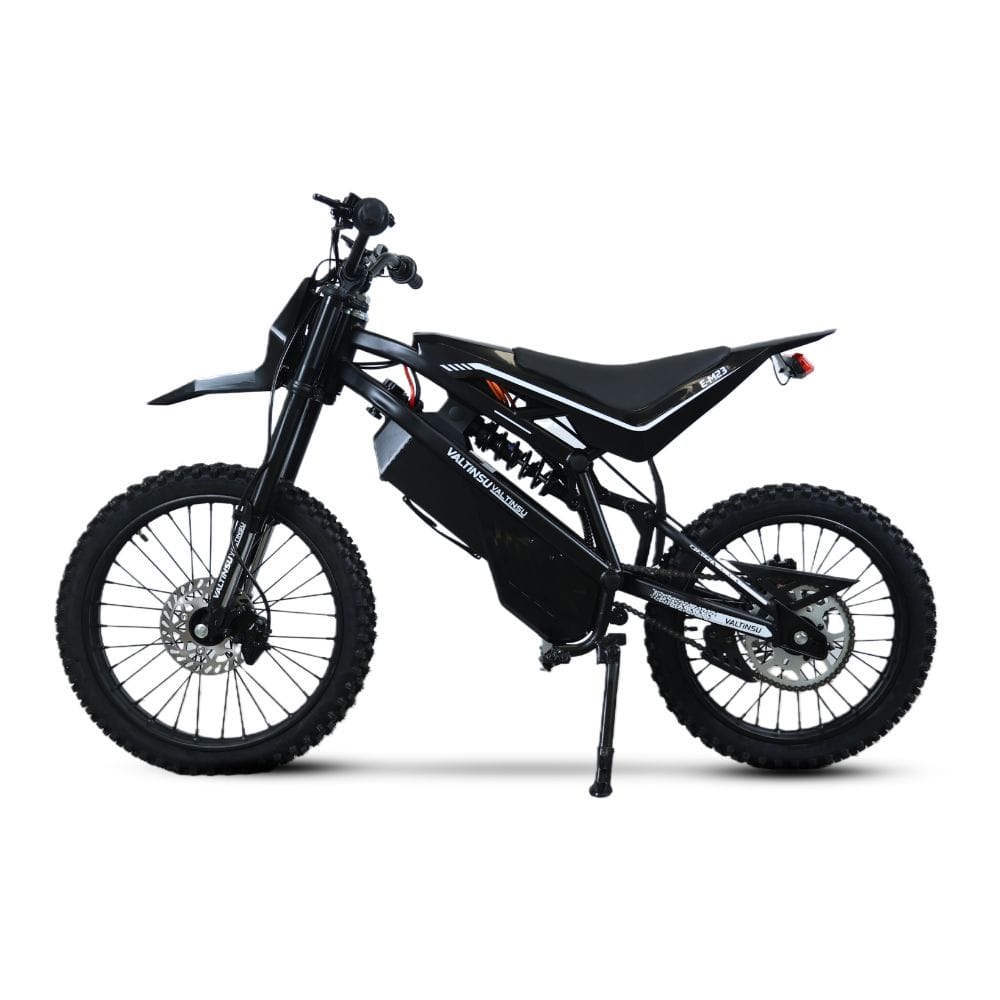
ELECTRIC DIRT BIKE
However, motor wattage alone doesn’t determine top speed. Battery voltage, controller settings, rider weight, terrain, tire size, and wind resistance all play significant roles.
In this guide, we’ll explain what you can realistically expect from a 3000W eBike, compare different battery systems, discuss legal considerations, and help you decide whether this power level is right for your riding style.
Although “3000 watts” sounds like a direct indicator of speed, it actually measures power output, not maximum velocity.
In real-world riding conditions, most 3000W electric bikes fall into these ranges:
Battery Voltage | Typical Top Speed |
48V | 30–40 mph |
60V | 38–48 mph |
72V | 45–55 mph |
72V High Performance | 55–60+ mph |
These figures assume:
Some custom-built bikes equipped with premium controllers and optimized gearing can exceed 60 mph, but those setups are generally intended for private land or dedicated off-road use rather than public roads.
One of the biggest misconceptions is assuming every 3000W motor delivers identical performance.
In reality, two bikes with the same motor rating can have very different top speeds.
Voltage has the greatest influence on maximum speed.
Higher voltage allows the motor to spin at a higher RPM, which increases top speed.
For example:
This is why two 3000W bikes can differ by more than 15 mph even though their motors share the same wattage.
The controller determines how much electrical current reaches the motor.
A higher-quality controller typically provides:
Many manufacturers also install electronic speed limiters for safety or regulatory compliance.
More weight requires more energy.
A rider weighing 220 lbs will almost always experience lower top speeds than someone weighing 150 lbs on the same bike.
The difference may reach 3–8 mph depending on terrain.
Expect significant speed differences between riding surfaces.
Typical examples include:
Fortunately, a 3000W motor provides enough torque to handle difficult climbs much better than lower-powered eBikes.
Larger tires require more torque to rotate.
Knobby off-road tires also increase rolling resistance compared with smooth street tires.
Above roughly 30 mph, wind resistance becomes one of the biggest factors limiting additional speed.
Absolutely.
To put things into perspective:
Bike Type | Typical Top Speed |
250W eBike | 15–20 mph |
500W eBike | 20–25 mph |
750W eBike | 20–28 mph |
1000W eBike | 28–35 mph |
2000W eBike | 35–45 mph |
3000W eBike | 40–55 mph |
A 3000W electric bike produces roughly four horsepower, placing it much closer to a lightweight motorcycle than a traditional bicycle in terms of performance.
This depends entirely on where you ride.
Many countries classify electric bicycles based on motor power and assisted speed.
For example:
Because of this, most 3000W bikes are considered:
Always check local laws before riding on public roads.
A 3000W setup isn’t necessary for everyone.
It makes the most sense for riders who need:
If your daily commute is under 20 mph on city streets, a lower-powered model is often more practical.
It depends on your priorities.
2000W | 3000W |
Lower cost | More expensive |
Better efficiency | Higher power consumption |
Easier handling | Faster acceleration |
Better for commuting | Better for off-road performance |
Usually lighter | Usually heavier |
For experienced riders who regularly tackle steep trails or demand stronger acceleration, the additional power of a 3000W system is often worthwhile.
At motorcycle-like speeds, safety equipment becomes just as important as motor power.
Look for:
Full-face helmet and protective riding gear
Power isn’t only about top speed.
Many experienced riders choose a 3000W electric bike because it delivers:
For trail riding, these advantages often matter more than an extra few miles per hour.
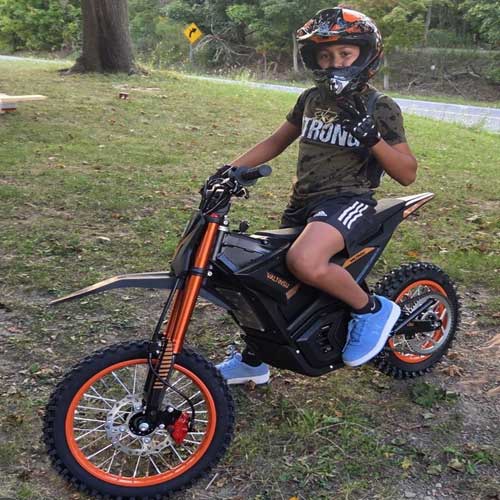
Brands like VALTINSU have responded to this demand by developing electric off-road bikes that prioritize torque, durability, and suspension performance rather than chasing headline speed figures. For riders exploring private trails or dedicated off-road parks, a well-engineered chassis and dependable power delivery are usually more valuable than the highest advertised top speed.
So, how fast is 3000W in mph?
For most riders, the answer is 40–55 mph, with premium 72V configurations capable of pushing even higher speeds under the right conditions. But wattage alone never tells the full story. Battery voltage, controller tuning, terrain, rider weight, and overall bike design all play a major role in real-world performance.
If your goal is off-road adventure, rapid acceleration, and confident hill-climbing, a well-designed 3000W electric bike can deliver an experience that bridges the gap between a conventional eBike and a lightweight dirt bike. Rather than focusing solely on the highest advertised MPH, choose a model with a durable frame, dependable braking system, quality battery, and balanced power delivery—features that ultimately make every ride faster, safer, and more enjoyable.
Not exactly.
Most 3000W electric bikes reach between 40 and 55 mph, but the actual speed depends on battery voltage, controller settings, rider weight, and riding conditions.
Yes.
Some 72V performance builds can exceed 60 mph under ideal conditions, although this is not typical for standard production bikes.
Yes.
One of the biggest advantages of a 3000W motor is its strong torque, making steep climbs much easier than with 750W or 1000W systems.
Battery voltage affects top speed, while battery capacity (Ah) mainly determines how far you can ride. A larger-capacity battery doesn’t automatically make the bike faster.